Piedmont. The word alone is enough to conjure the taste of cherries, red wine, truffles, and hazelnuts on my tongue.
I remember my time there, see the images in my mind’s eye, and think: Can this really be true?
Can I trust my memory? It’s a trickster; it loves to play tricks on me. It changes what happened, romanticizes it, and, as if by instinct, lays a filter over the images in my mind. This time it doesn’t get the chance, because the magnificent colors, the gentle morning haze, and the captivating beauty of the Langhe have got there first.
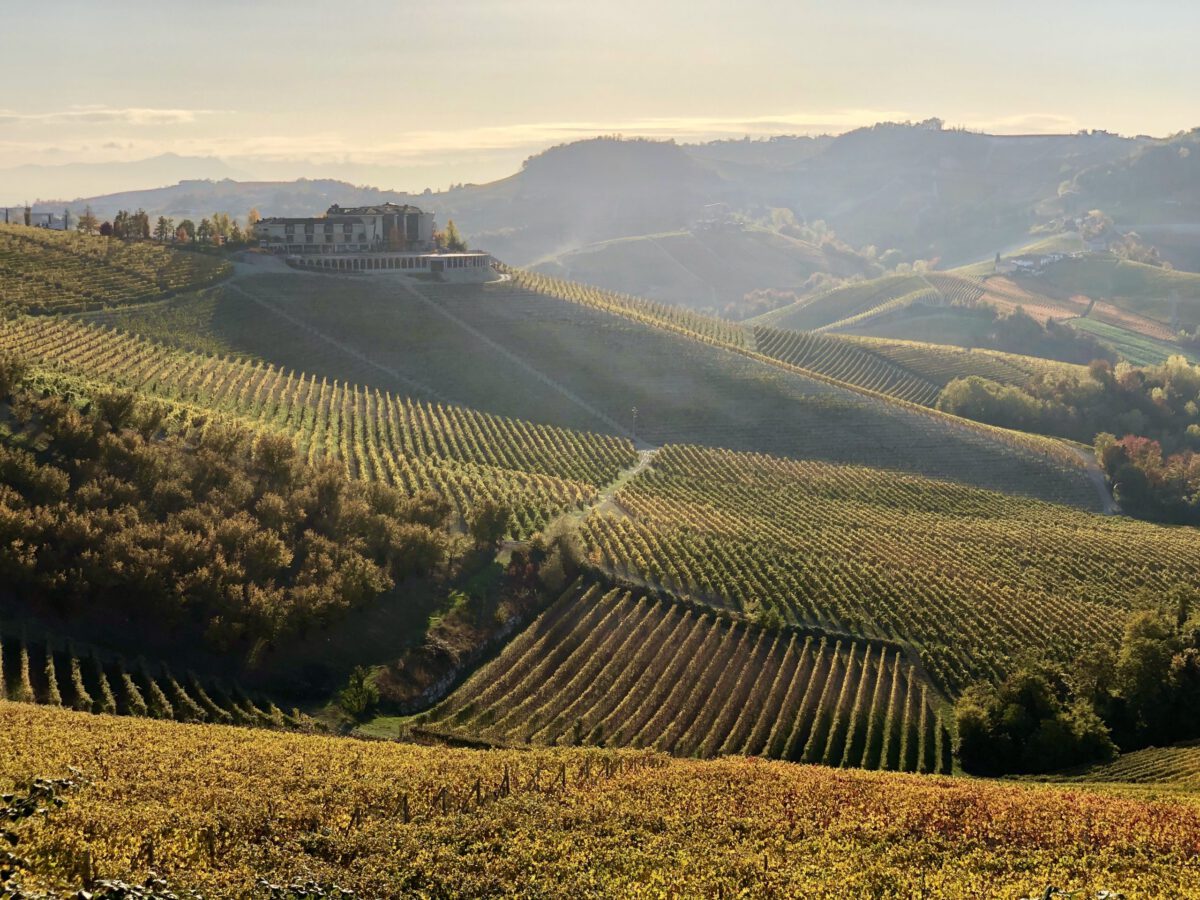
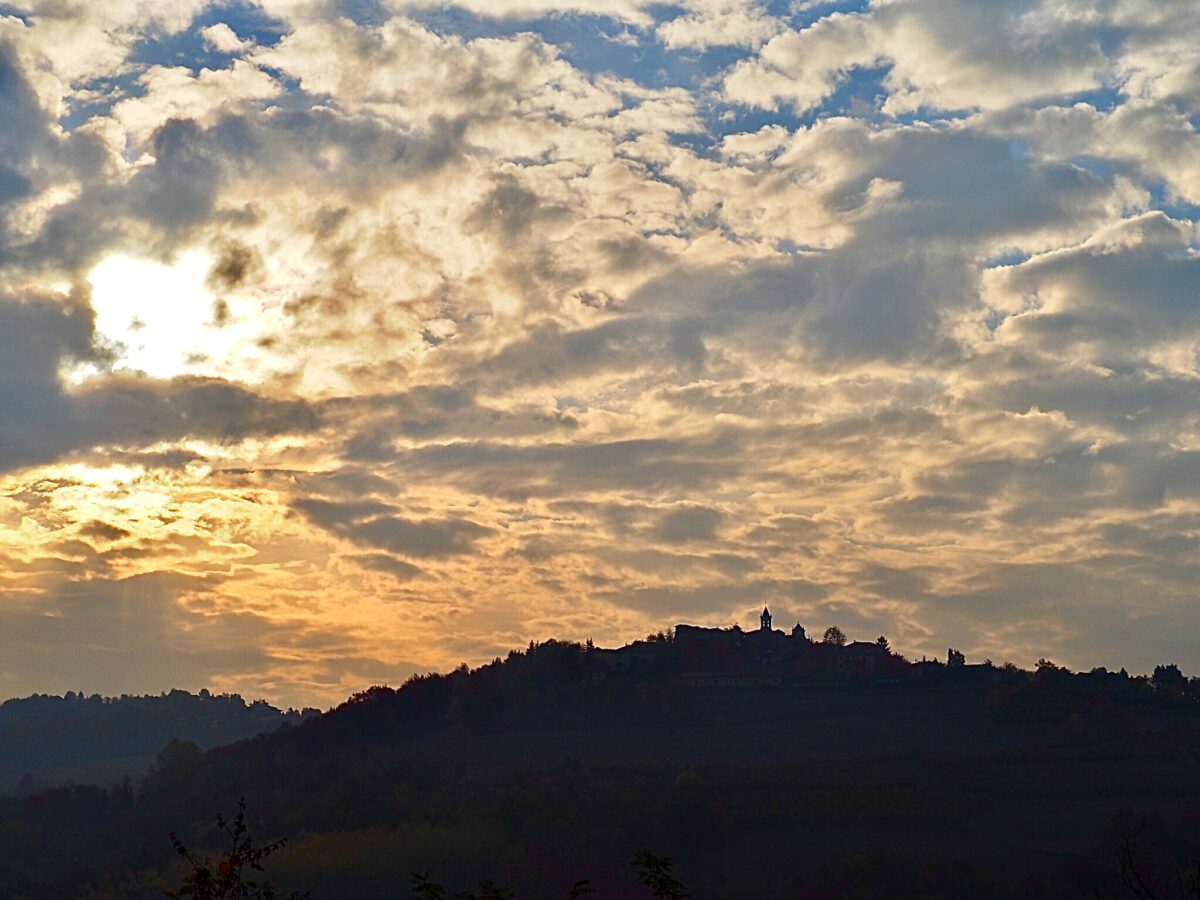
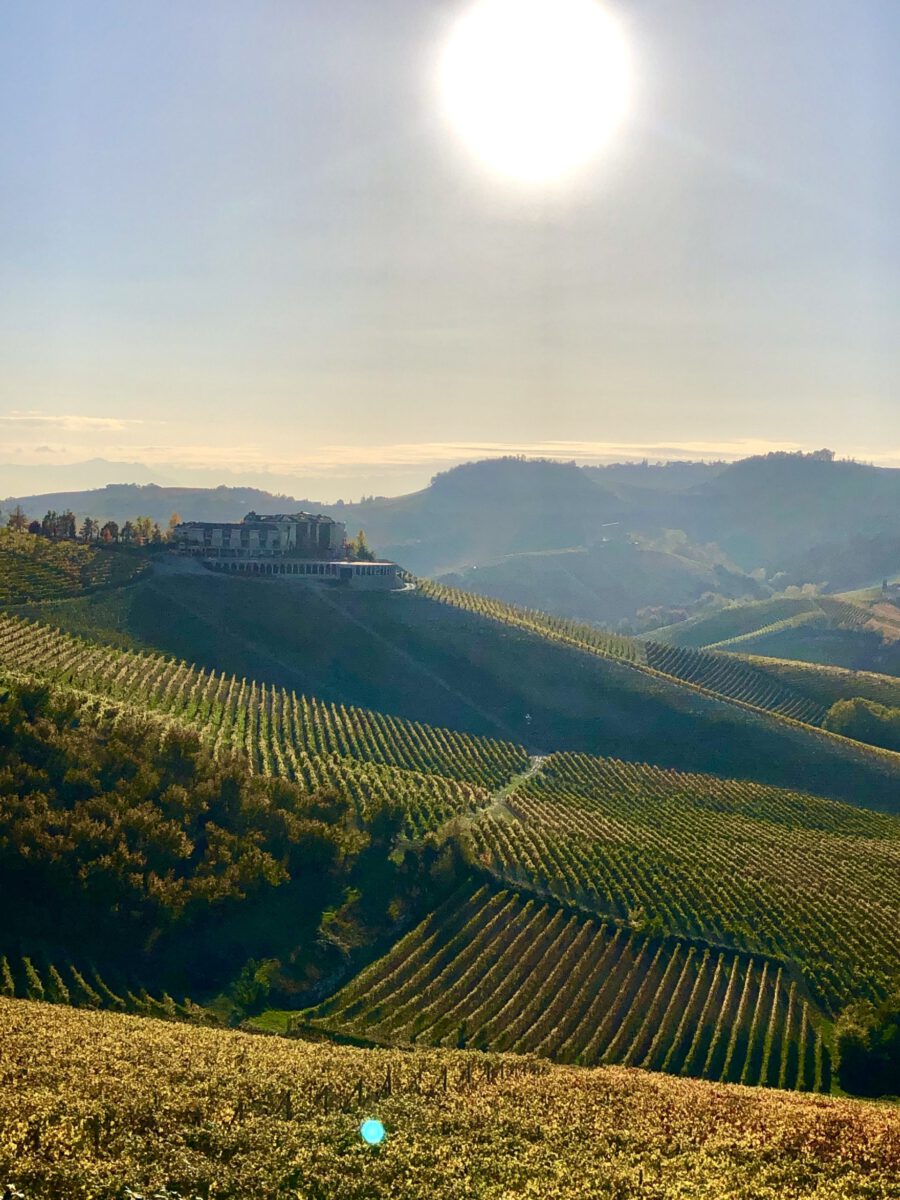
It is autumn, and for the first time I’m driving along the winding roads, gazing in wonder at the breathtaking landscape, with its gentle hills, endless vineyards, and picturesque little towns, each with a centuries-old church presiding over its center.
I steer my car along narrow roads. The traffic thins, until eventually there is hardly any at all. Almost every five minutes I stop, get out, listen to the silence, breathe deeply, and try to hold on to the moment, to store it deep inside me, so I can draw on it later, when everything turns gray and dark again.
I let my gaze wander over the vineyards, decked out in all the colors of autumn, and a thought takes hold of me—a thought that will keep coming back to me over the next few days: I don’t have the words.
I’m here to write, to devote myself to language, to work on a new novel, and I can’t help smiling at the irony of finding myself in an indescribable place. These are colors that touch my heart and show me that the vocabulary I’ve painstakingly built up over the past forty years isn’t enough to describe what surrounds me right now.
It would be a crime to describe the colors of the vineyards simply as yellow, orange, red, and brown. No, I need more than that to put this immense palette into words adequately. I rummage around in my mind and come up with terms like honey yellow, scarlet orange, brick red, and olive brown. A good start, I think. But nowhere near good enough.
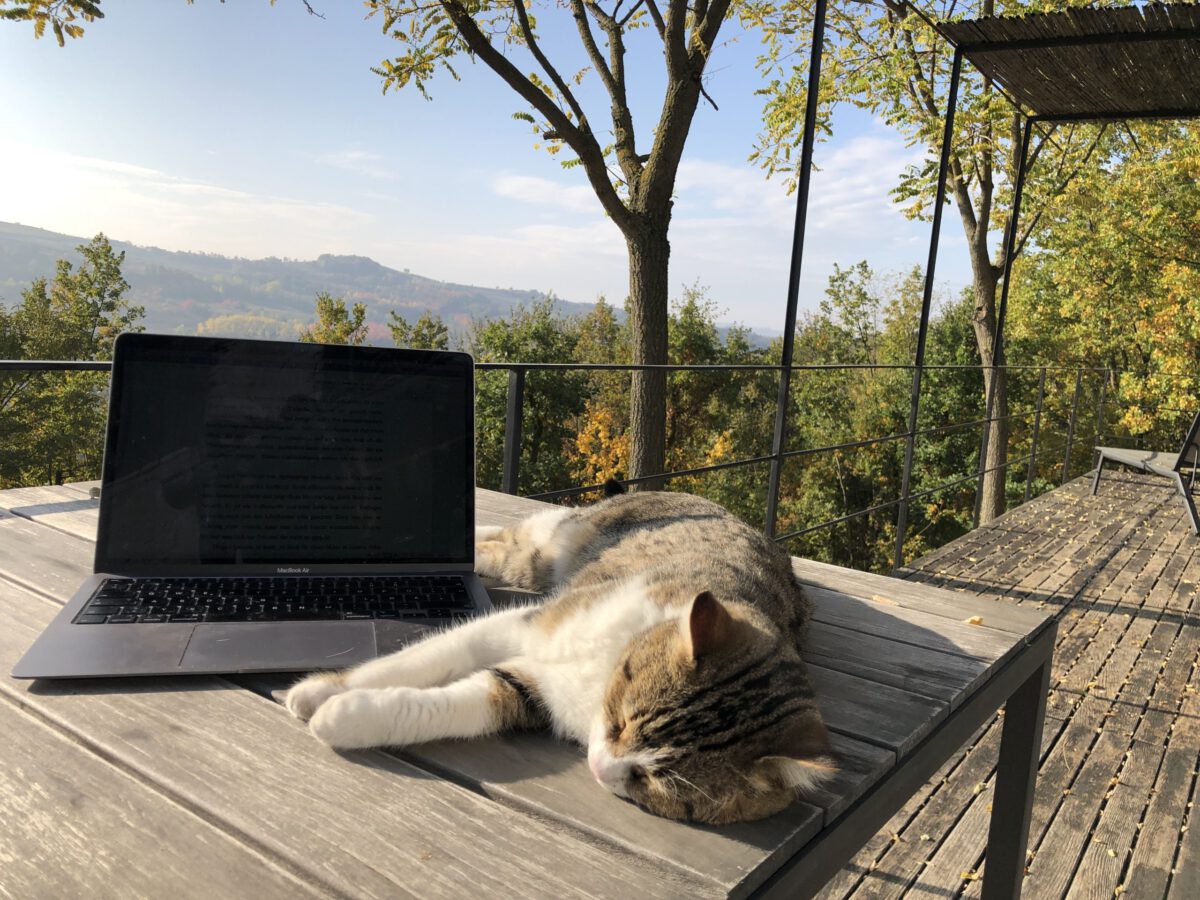
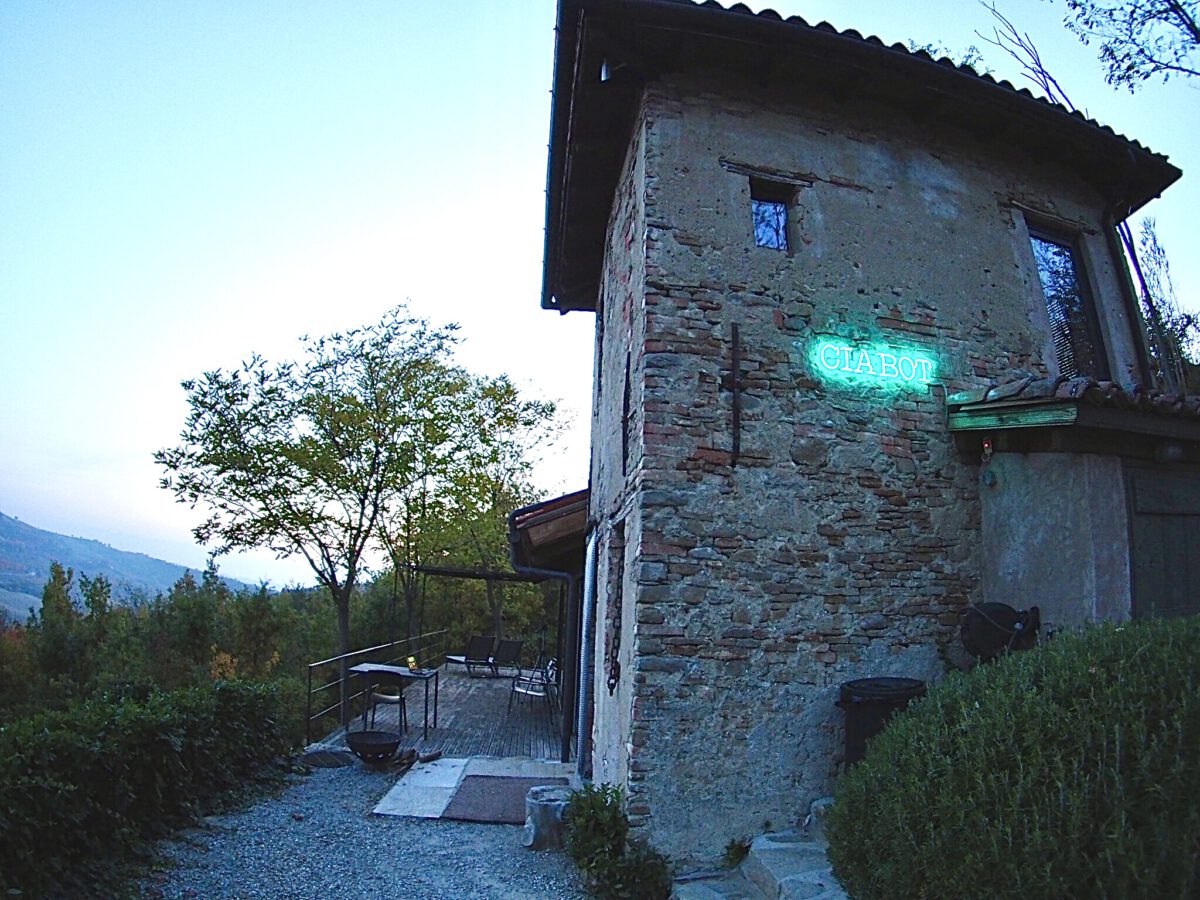
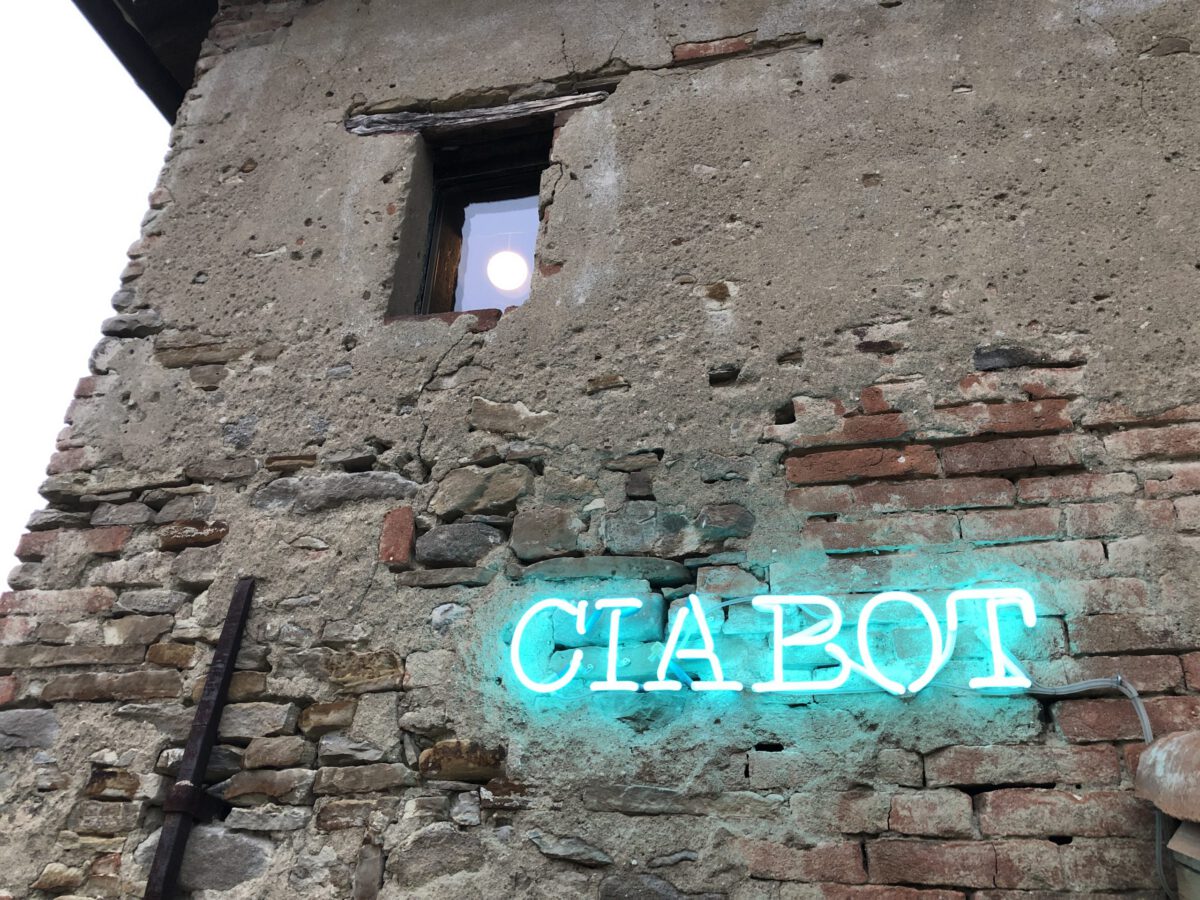
I resolve to google the terms as soon as I get to my accommodation—and forget all about it the moment I step into the Ciabot, the place Yvonne Amann and her husband Jörg have made available to me for a week so I can devote myself entirely to writing.
It’s a blend of medieval castle and stylish loft. Modern, bright architecture set within old stone walls. This is a place to find yourself, I think, not to waste time on the internet.
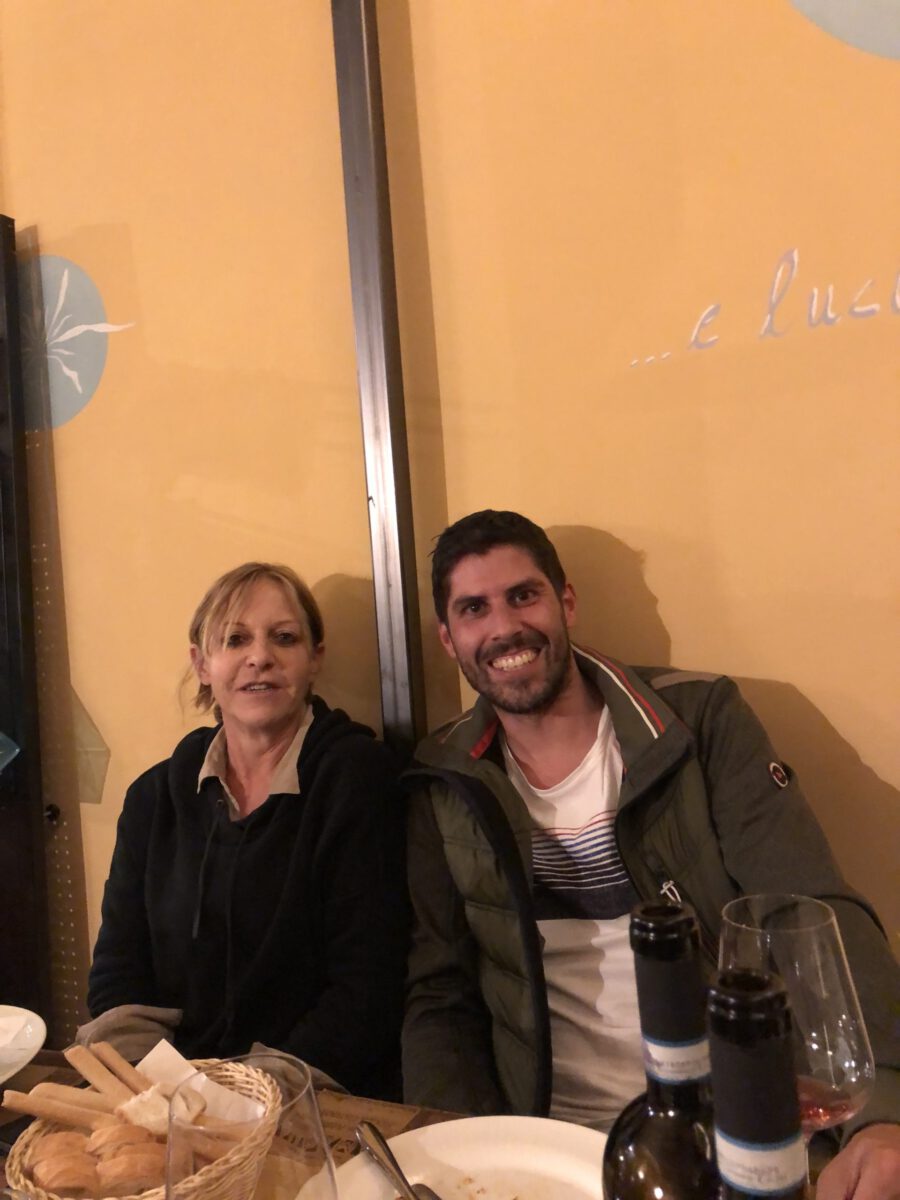
Every day I go on an outing, wander through the little towns of Monforte d’Alba, Dogliani, and Mondovì, each more enchanting than the last, meet my host in an osteria, drink wine, and savor the delicious little bites. Yvonne whispers a secret about the taciturn waiter in my ear. His family has run this restaurant for more than a hundred years: he distrusts cyclists, she says, laughing. There isn’t enough room in their tight pants to keep money in them.
At a tavern I meet Mauro, a local who loves the area above all else and can’t help raving about it constantly. Dreamily, he describes the cool autumn mornings when only the hilltops emerge from the fog. He closes his eyes for a moment, opens them, drains his glass of wine in one go, and says goodbye with a smile.
The week passes quickly. What remains are images, scenes, smells, tastes, and the desire to return.
Back home, I was on the verge of googling the colors I couldn’t describe. I didn’t.
In the end, it would always be an attempt to put into words what you should have seen with your own eyes.