Piedmont is rich in wine, hazelnuts and truffles. But mustard or chili peppers? They are rare. Hardly any farmers try their hand at growing them, even though the natural conditions promise success. One couple who saw this gap are Elisa and Paolo Artusio from Ceva in the south of the Langhe. On their small farm, which Paolo’s grandmother used to run, they embarked on an unusual new venture during the coronavirus pandemic, as newcomers to farming. In the spirit of the Slow Food movement, they turn mustard seeds, onions and chili peppers into aromatic, high-quality products. They sell them under the label “Mosto Ardente”. Piedmontese mustard, chili sauce, red onion jam and perhaps soon a genuine “Hot Langa Liquore”.
Sinapis alba – Facts about the mustard plant
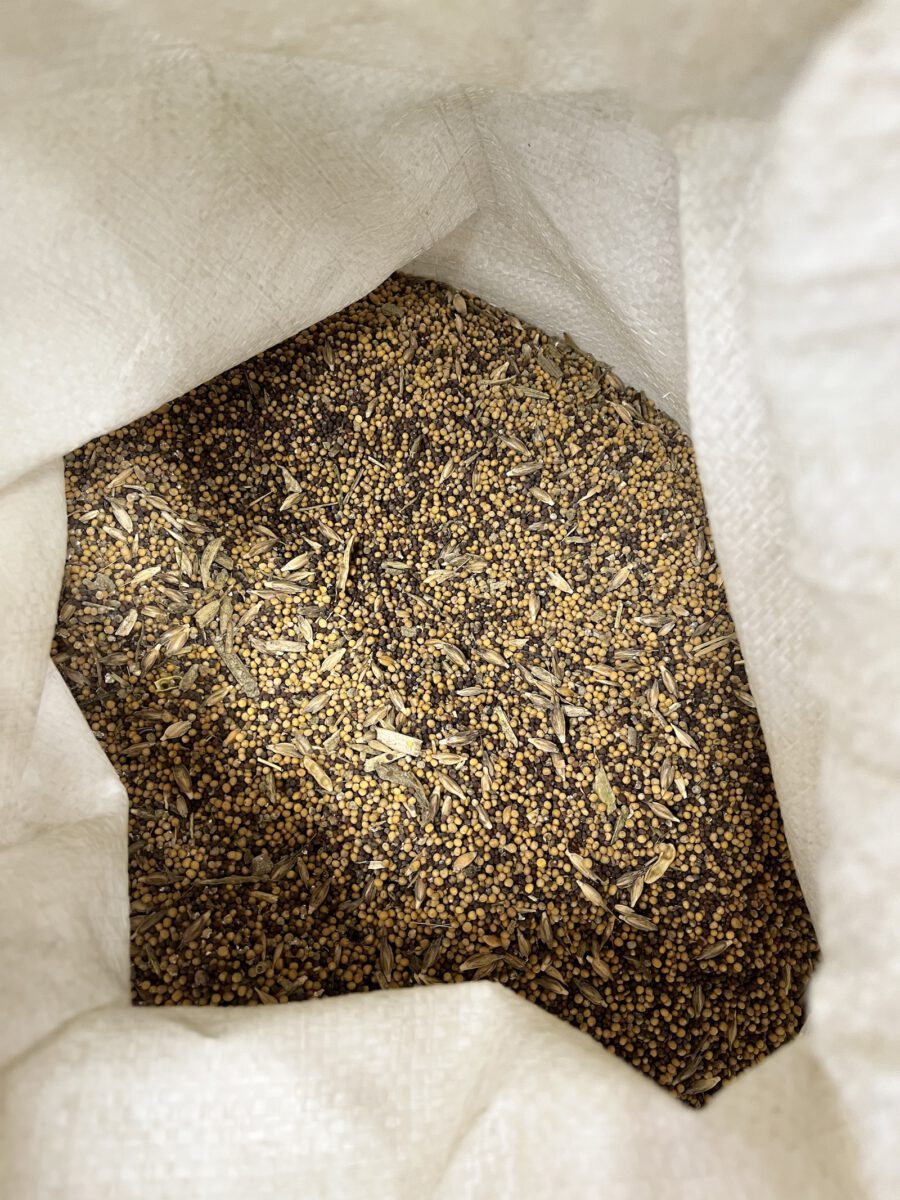
“Sinapis alba” is the Latin name for the white mustard plant. Mustard seeds, mustard flour and oil are made from it. Because the plant has deep taproots, it also loosens the soil, making it an attractive cover crop for farmers. Its foliage can be used as animal feed, while the mustard seeds ripen in its pods. They are the basic ingredient in mustard production.
Depending on the region, sowing begins in spring. On the Artusios’ farm in Castellino Tanaro near Ceva, the ideal time is April. Mustard grows quickly. The first leaves appear after just three weeks, and soon the plants can reach a height of one meter. The flowering season is in summer. The fields shine a sunny yellow, like rapeseed fields. For Paolo and Elisa of Mosto Ardente, this marks the most labor-intensive time of the year: the mustard has to be harvested. It is important to ensure that the pods remain closed during harvesting. This is the only way to make sure the mustard seeds don’t get lost on the way from the field.
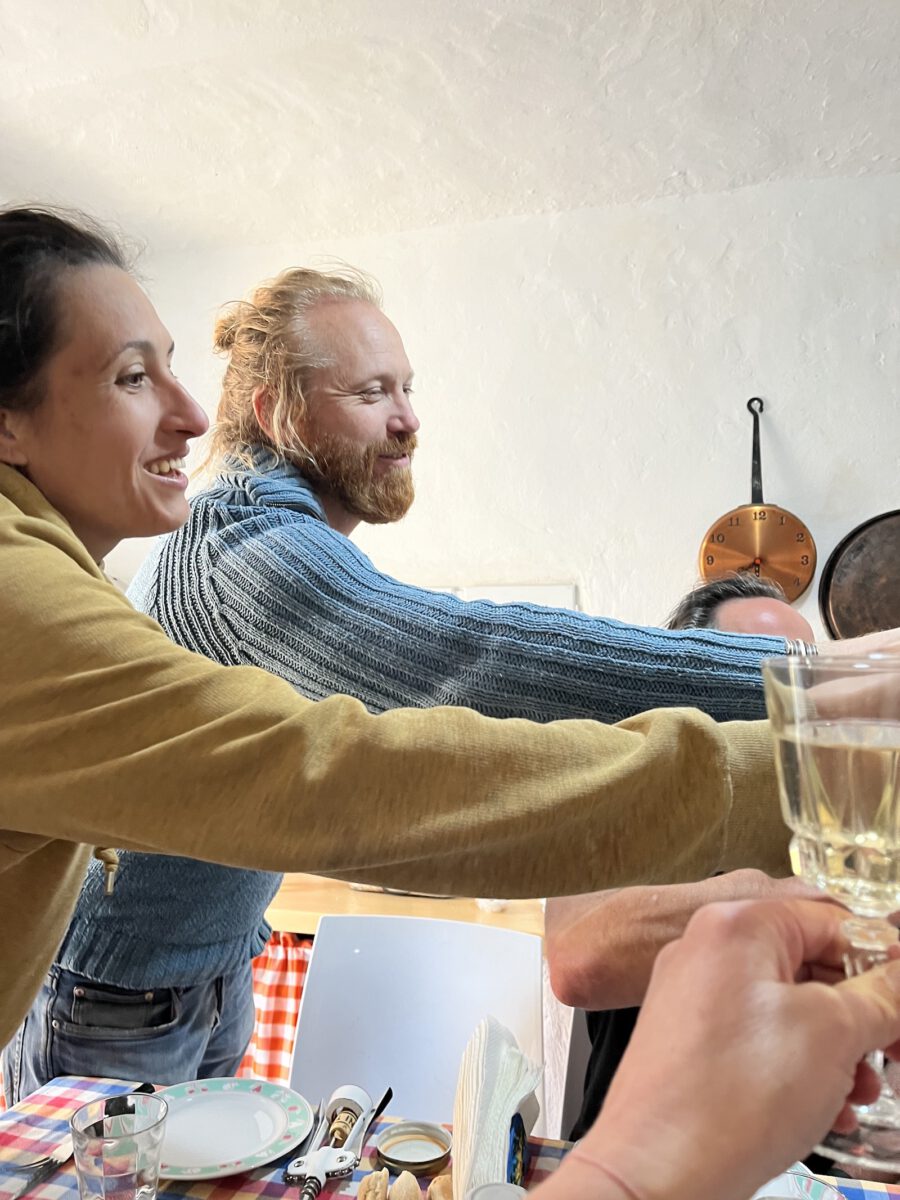
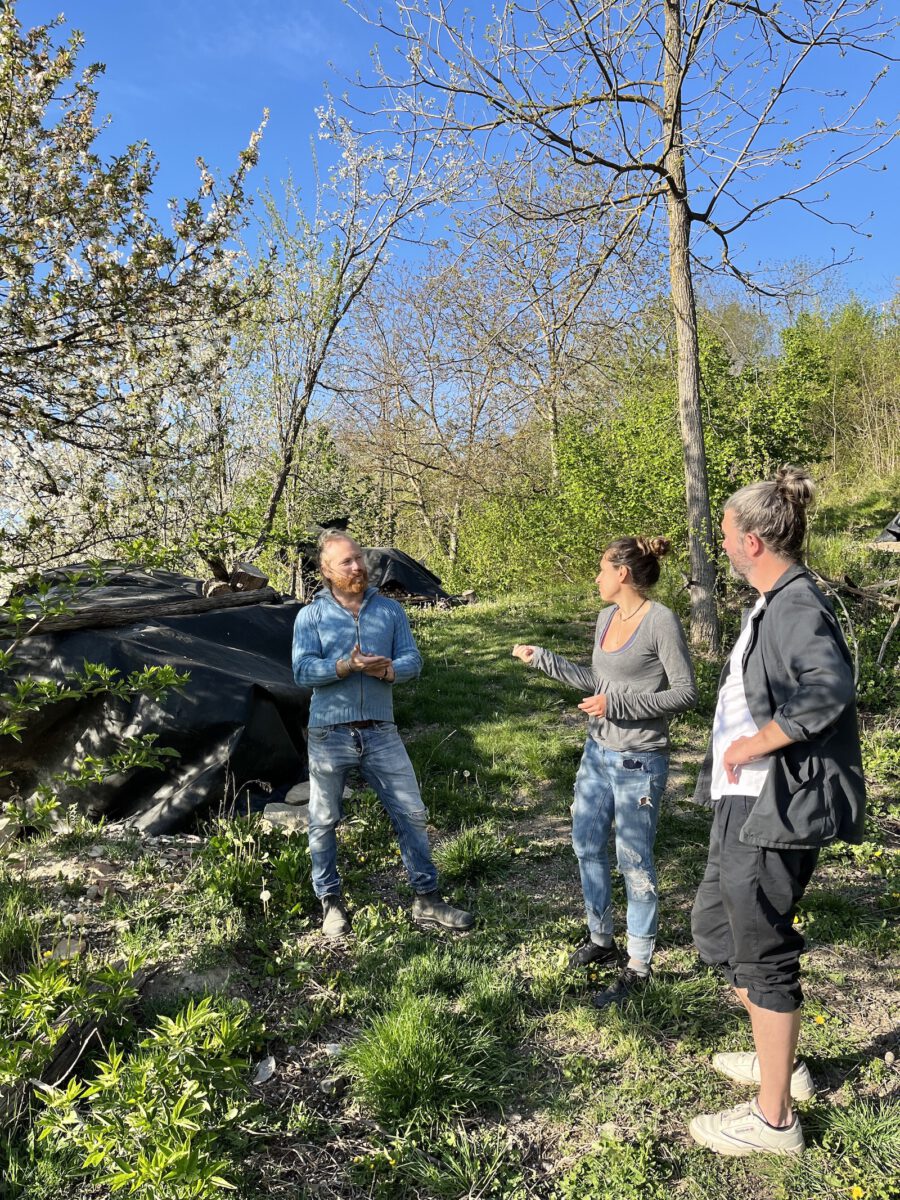
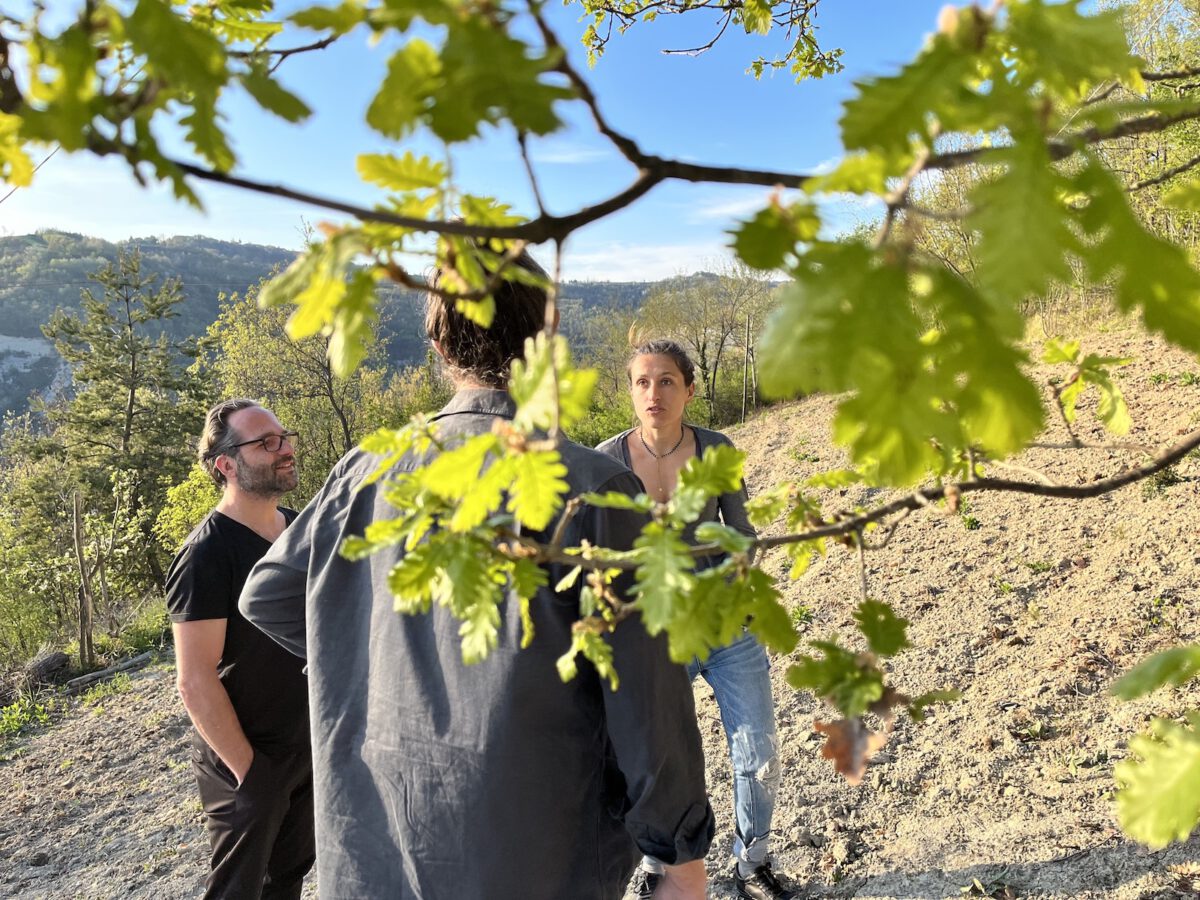
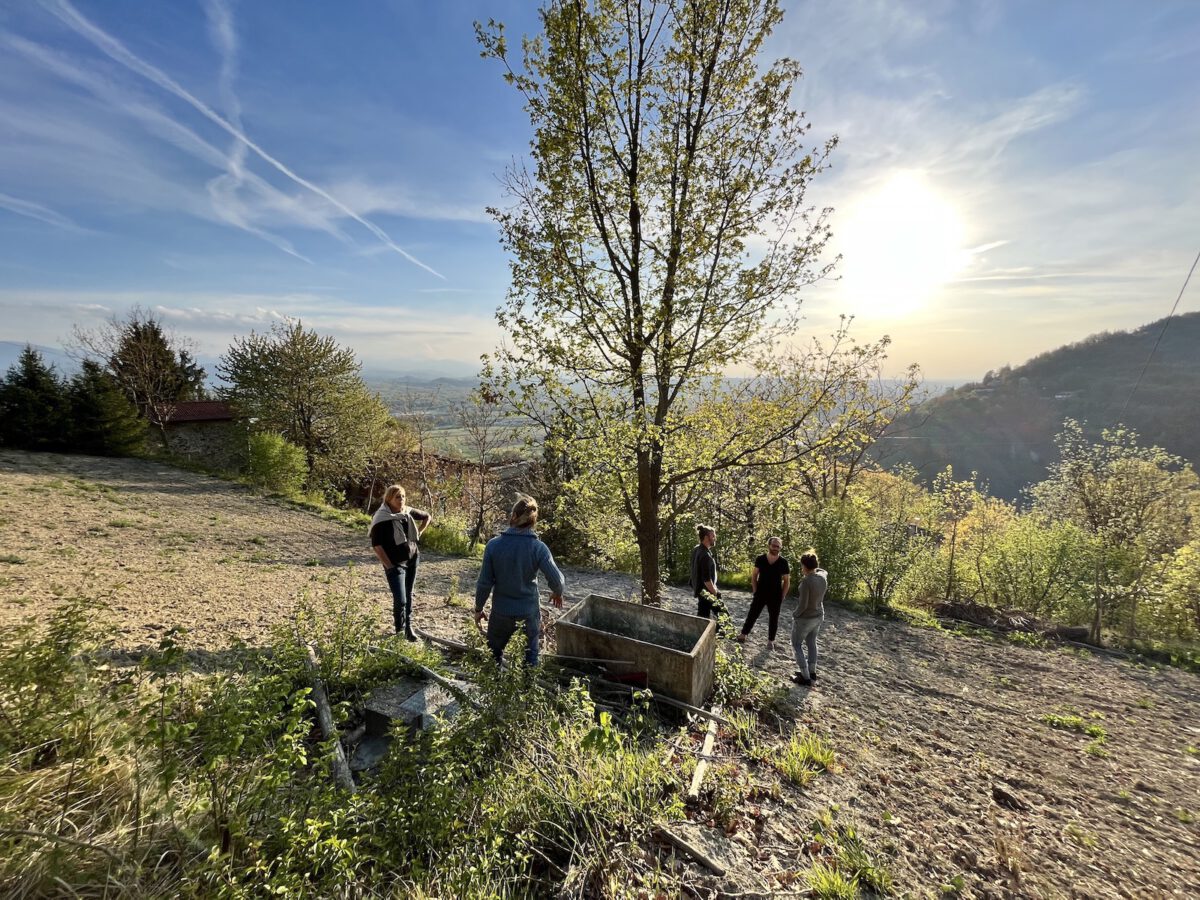
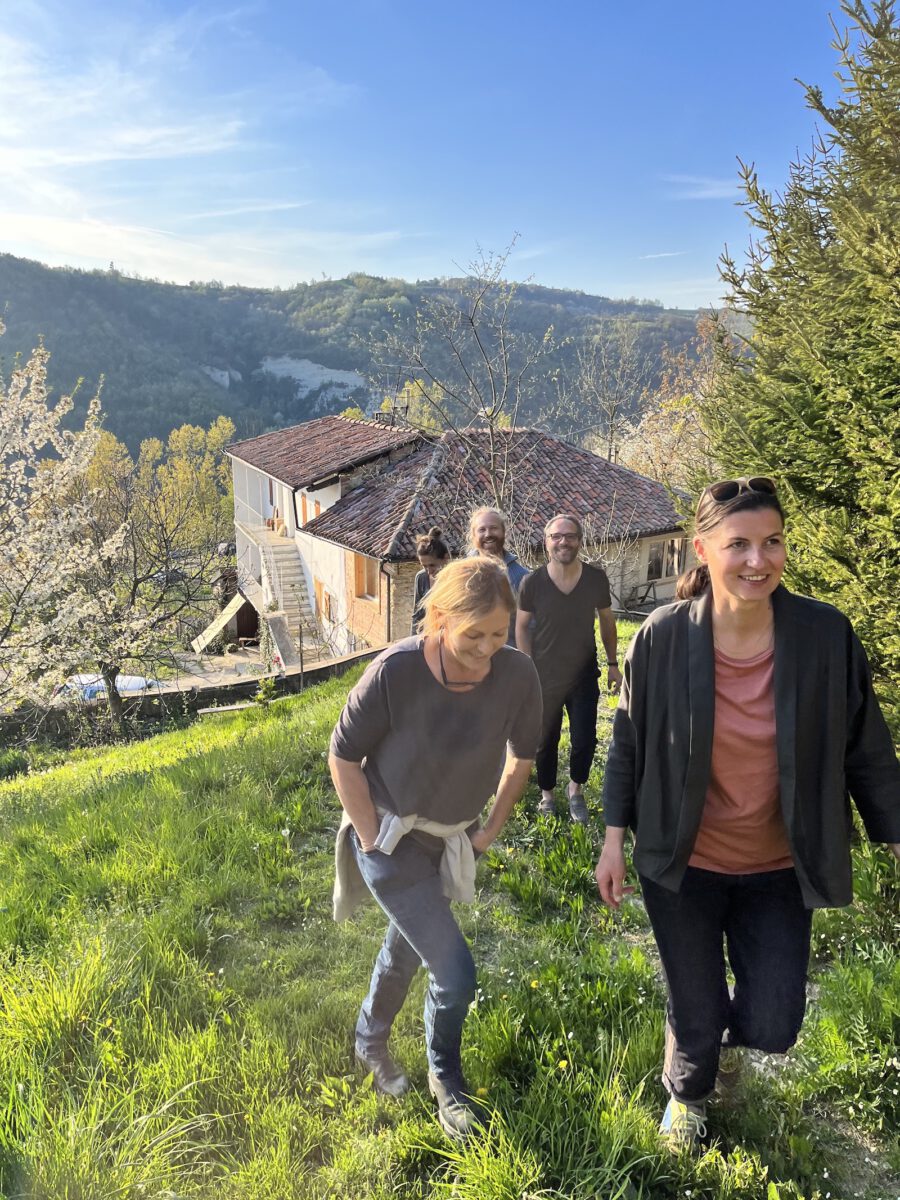
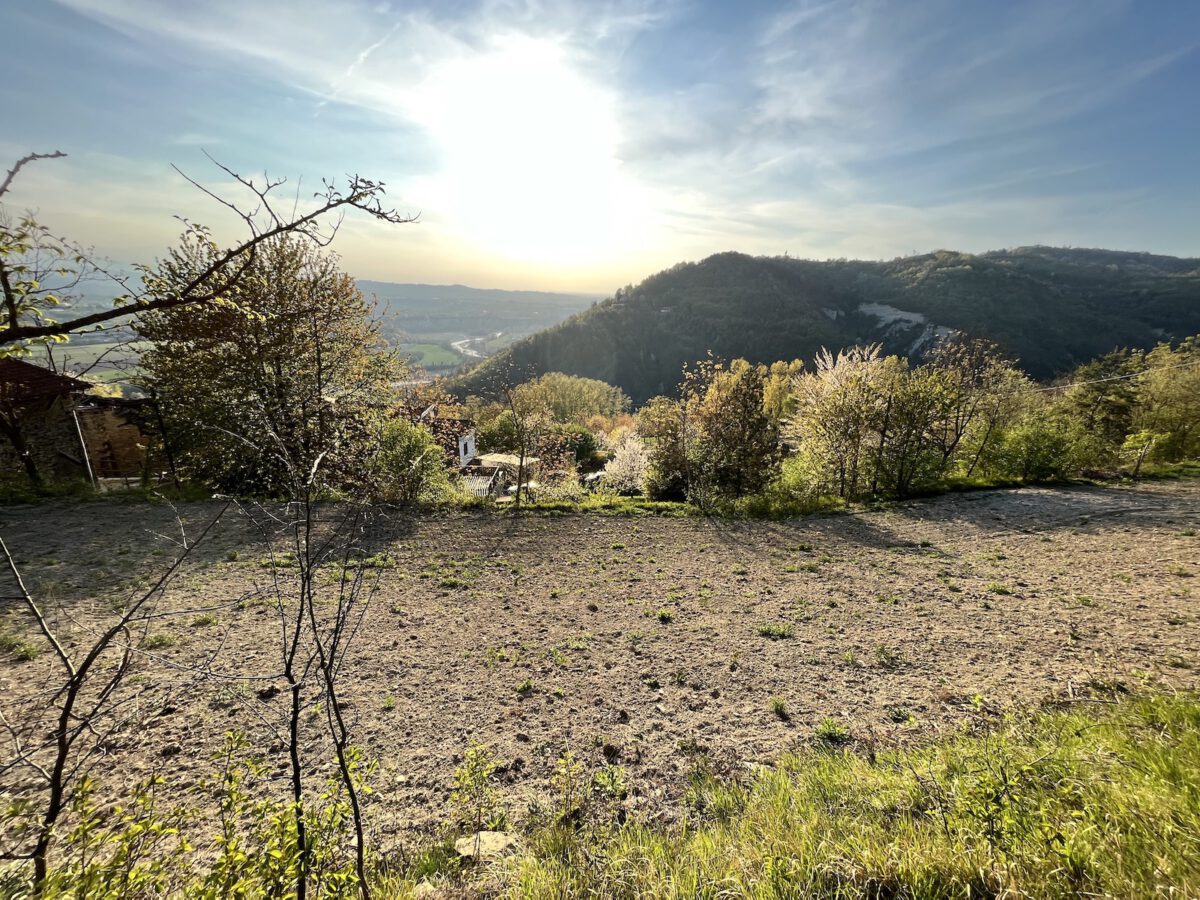
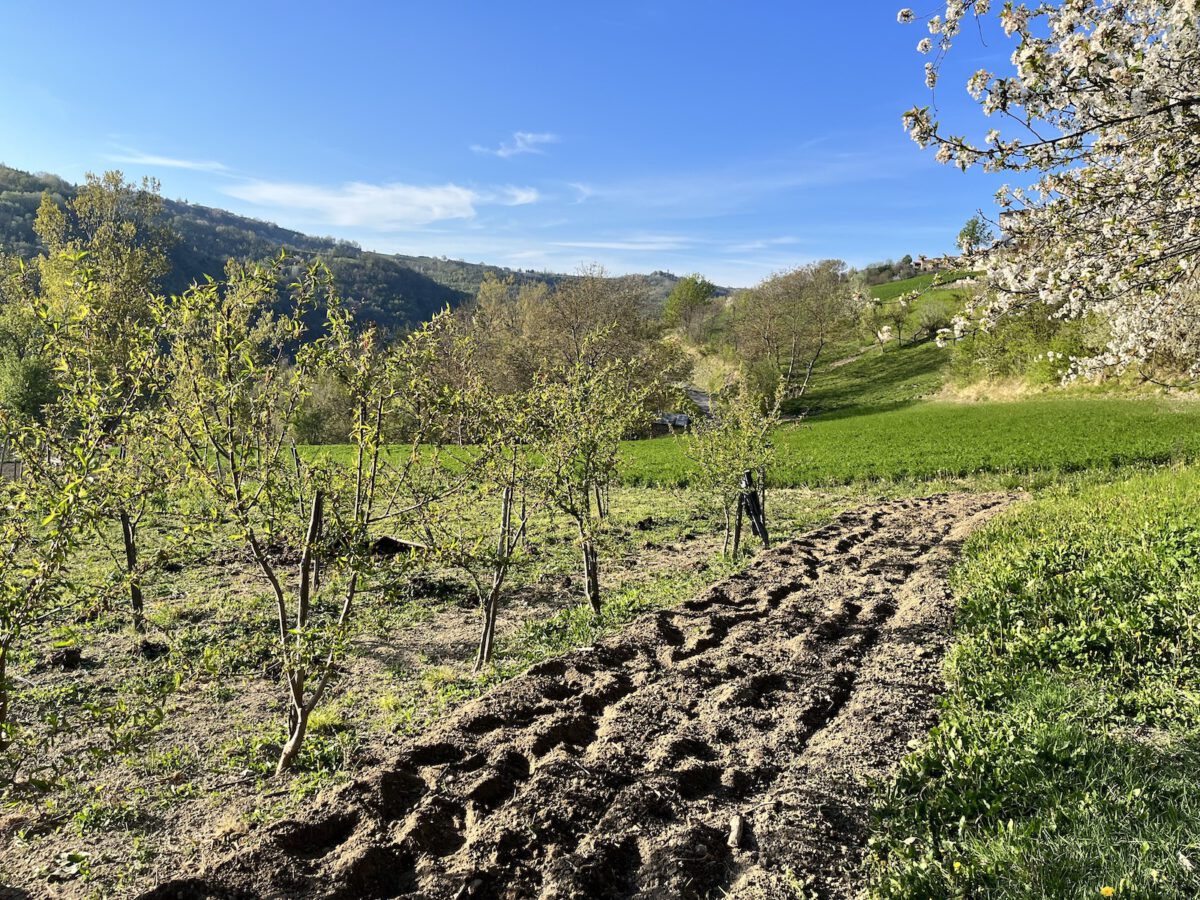
When we visit Elisa and Paolo, it is spring in Piedmont. The fields lie fallow. Preparations are underway for the new planting season. As we stroll through the farm’s garden and into the small laboratory, however, we still get a comprehensive impression of their distinctive mustard and chili production. We see some of the fields where they grow mustard, onions and chili peppers.
Our small farm: Mosto Ardente’s little paradise in Castellino Tanaro
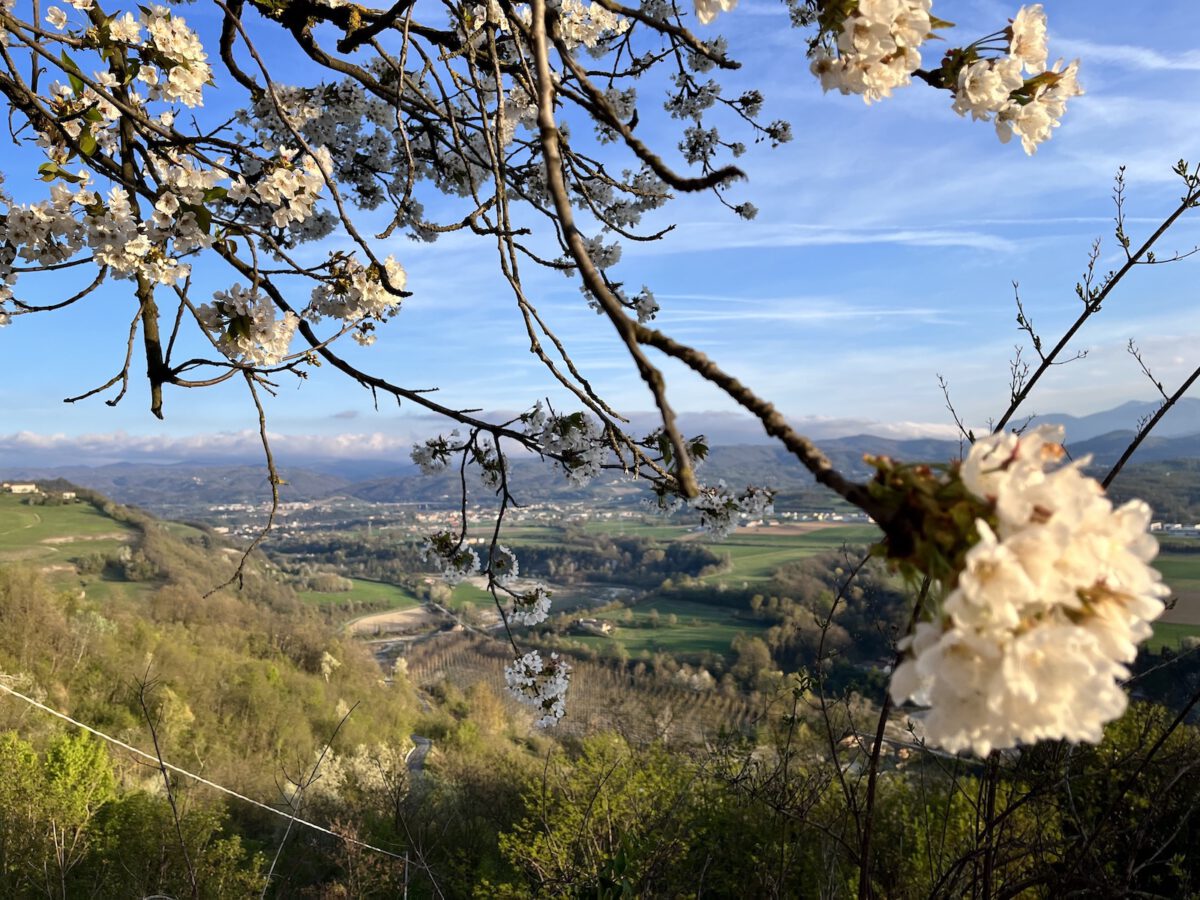
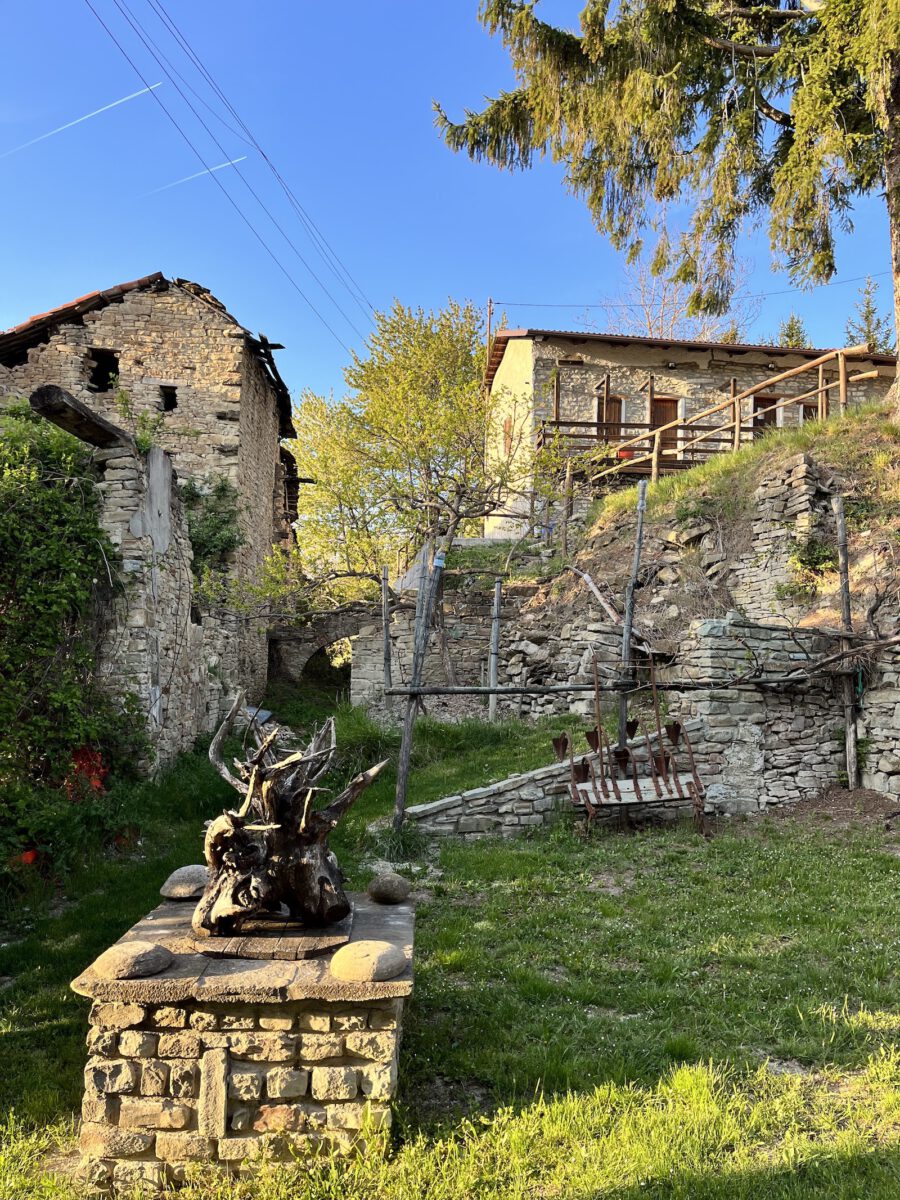
Mosto Ardente’s farm is surrounded by a handful of houses used both for farming and as holiday accommodation. The Tanaro river winds through the valley, while the view stretches to the horizon and the Ligurian Alps. Castellino Tanaro is just a few minutes by car from the lively town of Mondovì. Ceva, Paolo and Elisa’s hometown, is also nearby.
To understand why Paolo and Elisa took this unusual path as new farmers, it helps to know their story. It begins with Paolo in Turin. After graduating from university, the world is open to him. He chooses a job with an NGO that first takes him to Morocco and later to Haiti. That is where he meets Elisa. She also works for an NGO, and in 2016 she decides to return to Piedmont with Paolo. In Ceva, they both find a new challenge at the Il Berlino Social Club. But the pandemic brings public life to a halt, and the bar has to close. To find a way to manage day-to-day life regardless, they look for alternative ways of living. They remember the farm in Castellino Tanaro, which belongs to Paolo’s 96-year-old grandmother. It is close enough to their home in Ceva to let them combine city life with a fresh start in the countryside.
But where to begin? The conditions aren’t ideal for growing sugar cane, which Paolo knows very well from his time in Haiti. Winegrowing would be possible, but neither of them is interested enough in it. They look for suitable plants and recipes that will allow them to make high-quality products with simple recipes. They settle on several types of mustard, onions and devilishly hot jalapeños. The jalapeño chili sauce becomes Paolo’s labor of love.
White mustard, black mustard, onions and jalapeños
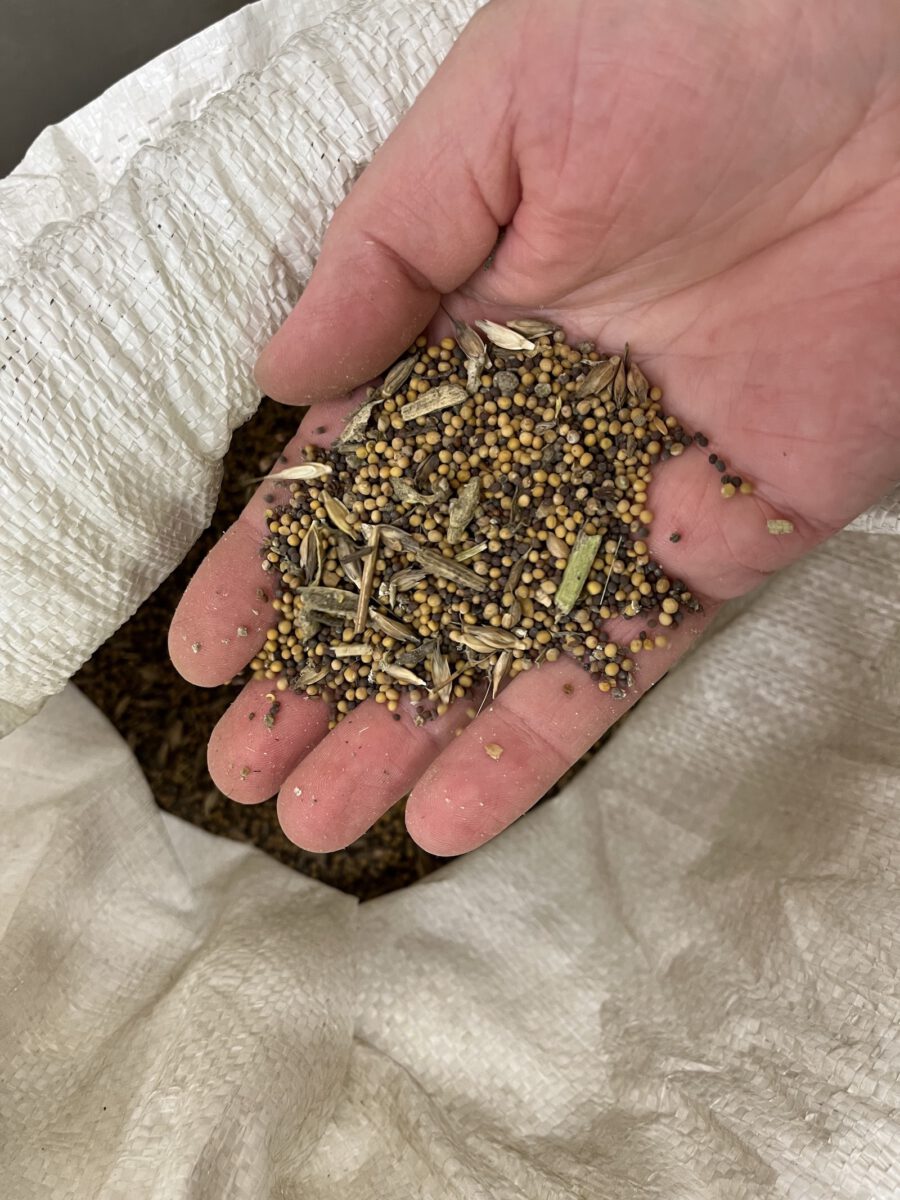
To ensure they harvest enough to produce sufficient quantities, Elisa and Paolo lease additional plots of land. They also lease machinery. They get help with growing, tending the fields and harvesting. They grow white mustard (Sinapis alba) and black mustard (Brassica nigra) in their fields; it is harvested in autumn. They also plant a thousand jalapeño seedlings on a steep slope behind the house. The onions, with their large green tops, grow in a field beside the grandmother’s former vegetable garden. Since environmental protection and sustainability are major concerns for Mosto Ardente, Elisa and Paolo avoid all chemical additives in their production.
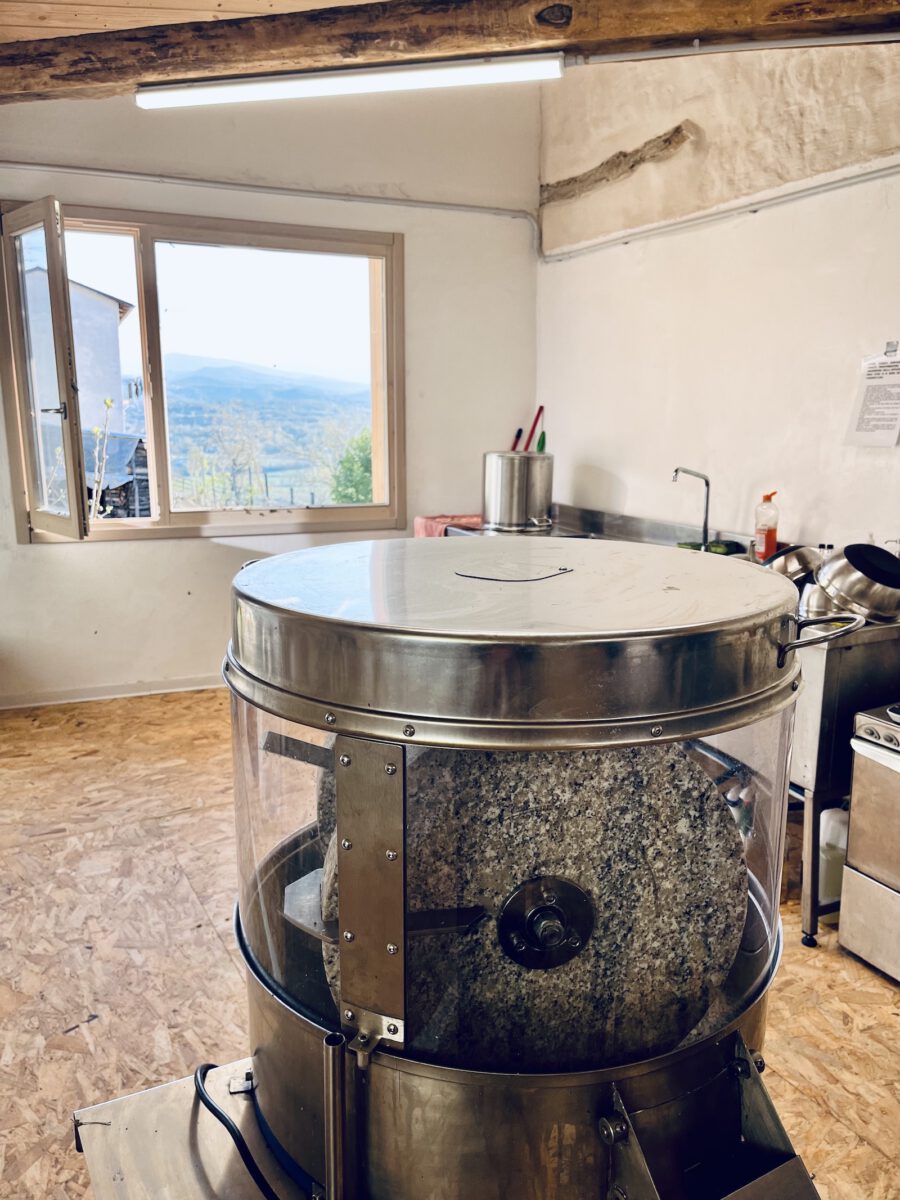
Summer is devoted to growth and irrigation; in autumn, the harvest is brought in. To make Mosto Ardente mustard, the seeds are cleaned, dried and ground in a mustard mill with large granite stones. Paolo and Elisa do this in the laboratory in the main house on the property. White Riesling from Serafina-Quota, apple cider vinegar, water, salt, and white and black mustard are used to make “Senape di Langa”. And because all the ingredients come from nearby, the environmental impact of this spicy accompaniment to meat and sausage is remarkably low. It is entirely in keeping with the ideals of Slow Food, which began in the nearby town of Bra.
Elisa and Paolo make a spicy chili sauce from the jalapeños. The onions are turned into a delicious onion preserve through fermentation and cooking. Elisa designed the packaging.
Products
Mustard (Senape di Langa)
Hot sauce (Hot Langa Salsa)
Onion chutney (Mostarda)