Opening
From the moment we first heard about Serafina Quota and the “Artist in Residence” project, a little flea had been in our ear. We really wanted to go there—it all sounded so right and appealing.
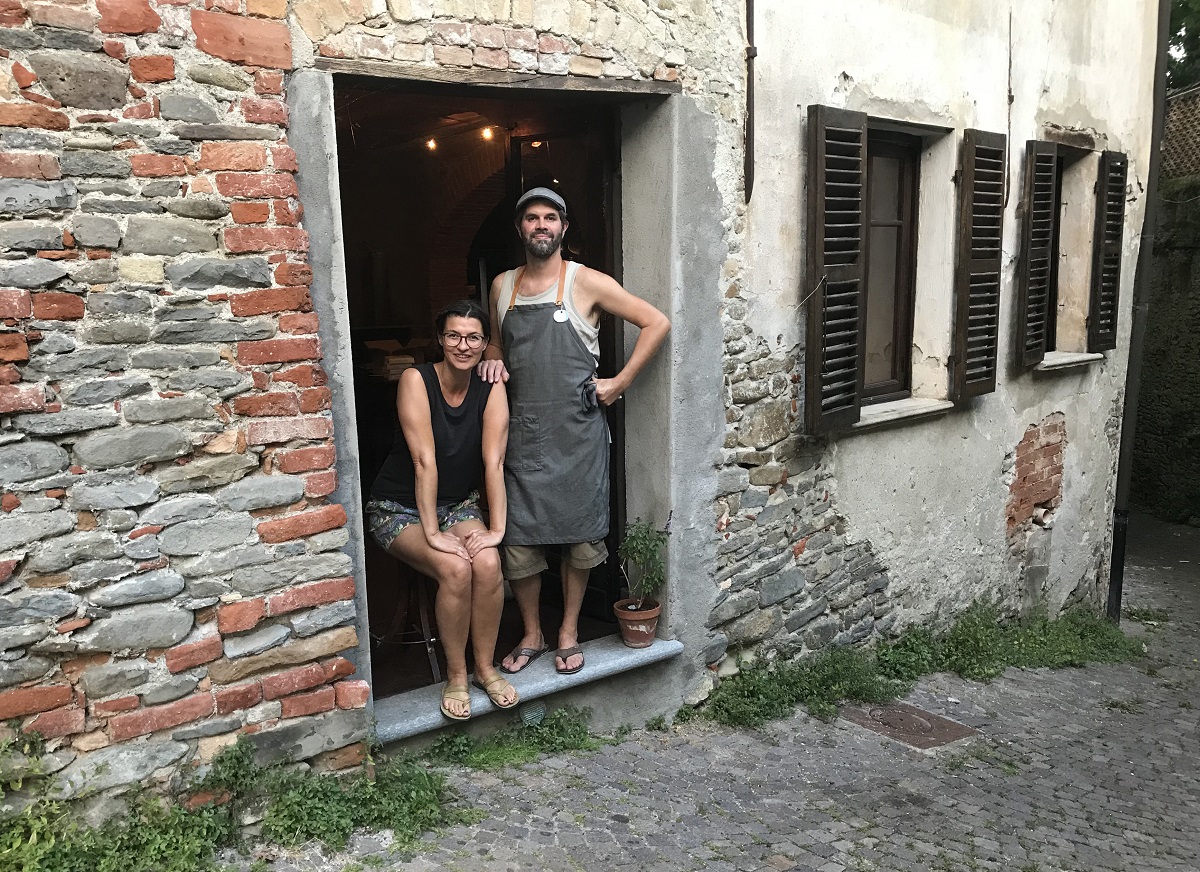
We are Ulla Schneeweis and Fabian Wittmann. Together, we live for and from our design studio with its paper workshop in Vienna. We took four weeks to immerse ourselves fully in the project. Everything else would have to wait. While we’re here in this inspiring landscape, surrounded by warmly welcoming people, nourished by food that is as simple as it is incredible, and exhilarated by unbelievably good wine, we have just one goal: to put this wine in the spotlight.
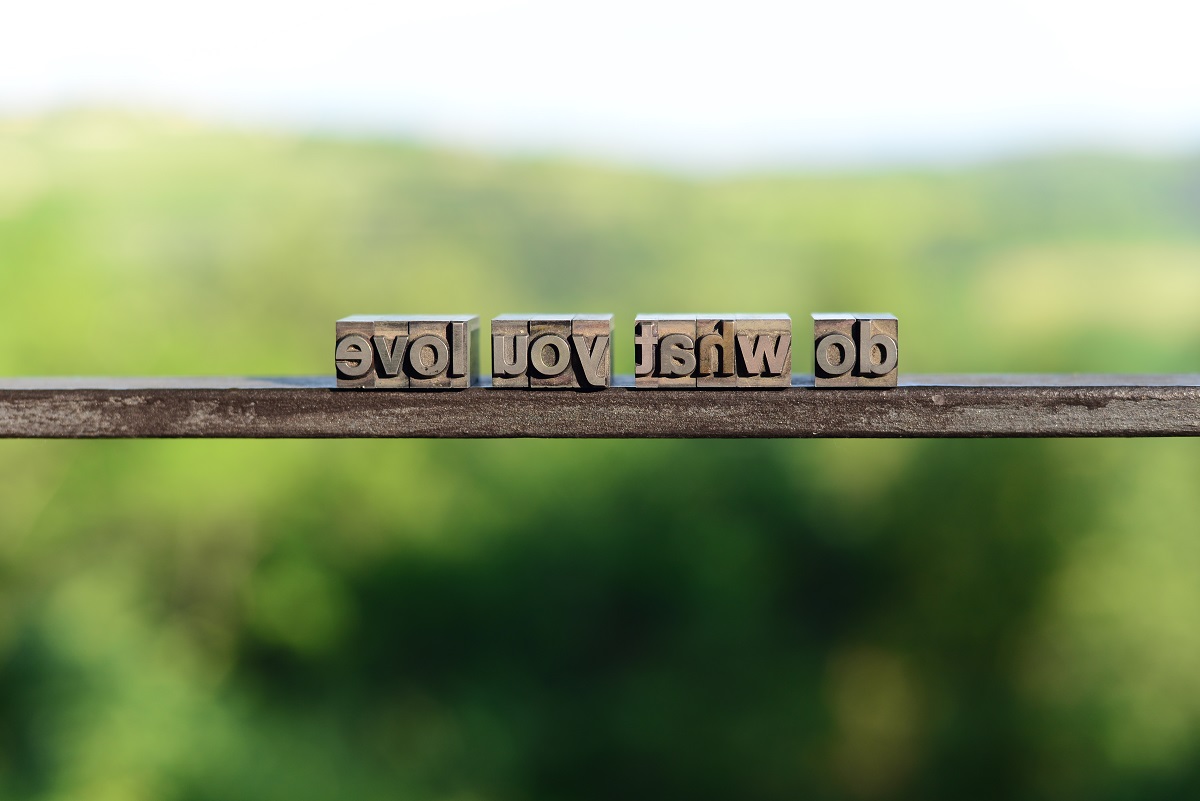
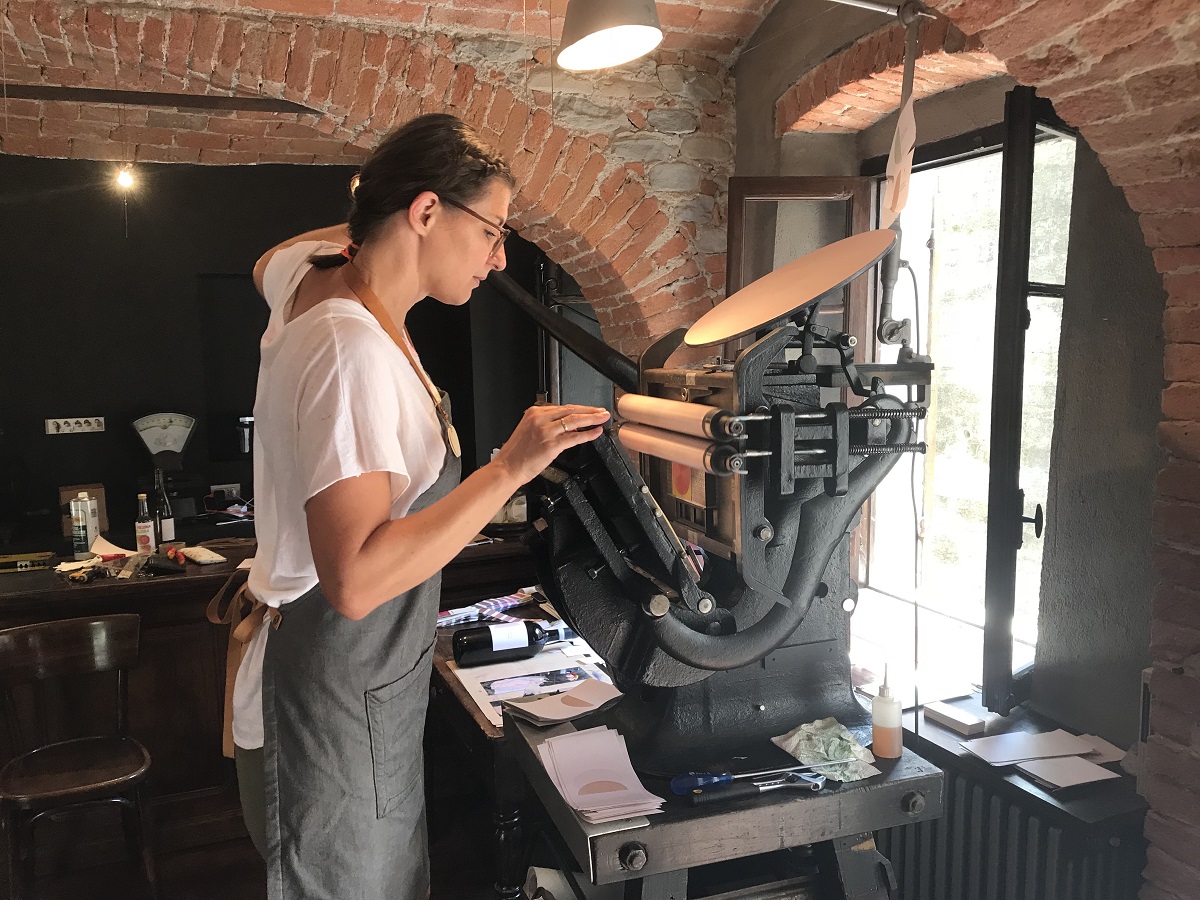
The wine is called “Do what you love”—and we take that literally. The question was never whether to bring our 150-year-old letterpress printing press from Vienna to Piedmont, only how, so we could set off on a shared printing adventure with the people here.
Everything went well, and now we’re here. We’re experimenting with shape and color, refining the typography, trying out materials and paper. And experiencing the helpfulness and curiosity of our neighbors in Dogliani Castello.
The result is a complete visual concept for this vintage and a limited special edition with hand-printed letterpress labels. And, of course, a wonderful story that we’ll be telling over a glass of wine for a long time to come.
Someone once said: “Choose a job you love, and you will never have to work a day in your life.” It seems we’re getting a little closer to that goal once again.
Inspiration
What should go on the label? What should it look like? What should it say? What should the viewer see, feel, think? How can we do justice to this special wine? These thoughts are circling in our minds. We thought we could start the way we usually do with our projects: research, sketch, design, develop, …
But our thoughts don’t seem to want to fall into place. We can’t steer them into channels where we can analyze and evaluate them together, so we can move forward with the process. Sometimes we feel as though inspiration has eluded us. Could it be that we’re overwhelmed by too many different impressions, which have simply filled our vessels of inspiration to the brim? It really does seem that way—it takes us days to figure it out. So we have to adjust to working differently. Not Dolce Vita in Bella Italia, sitting comfortably in the sun and being a little creative. But really working, struggling with ourselves, doubting, discussing, pushing beyond our limits and, finally, exploring something new.
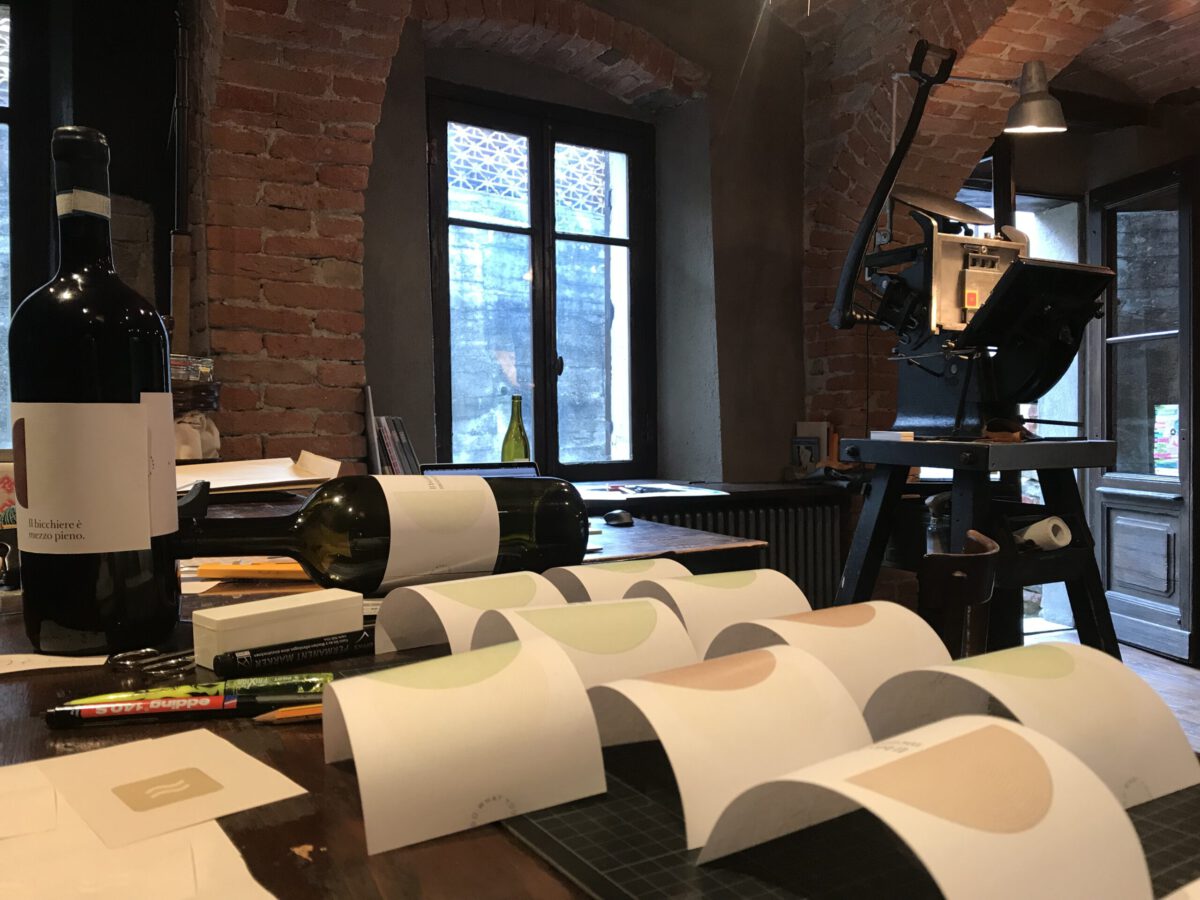
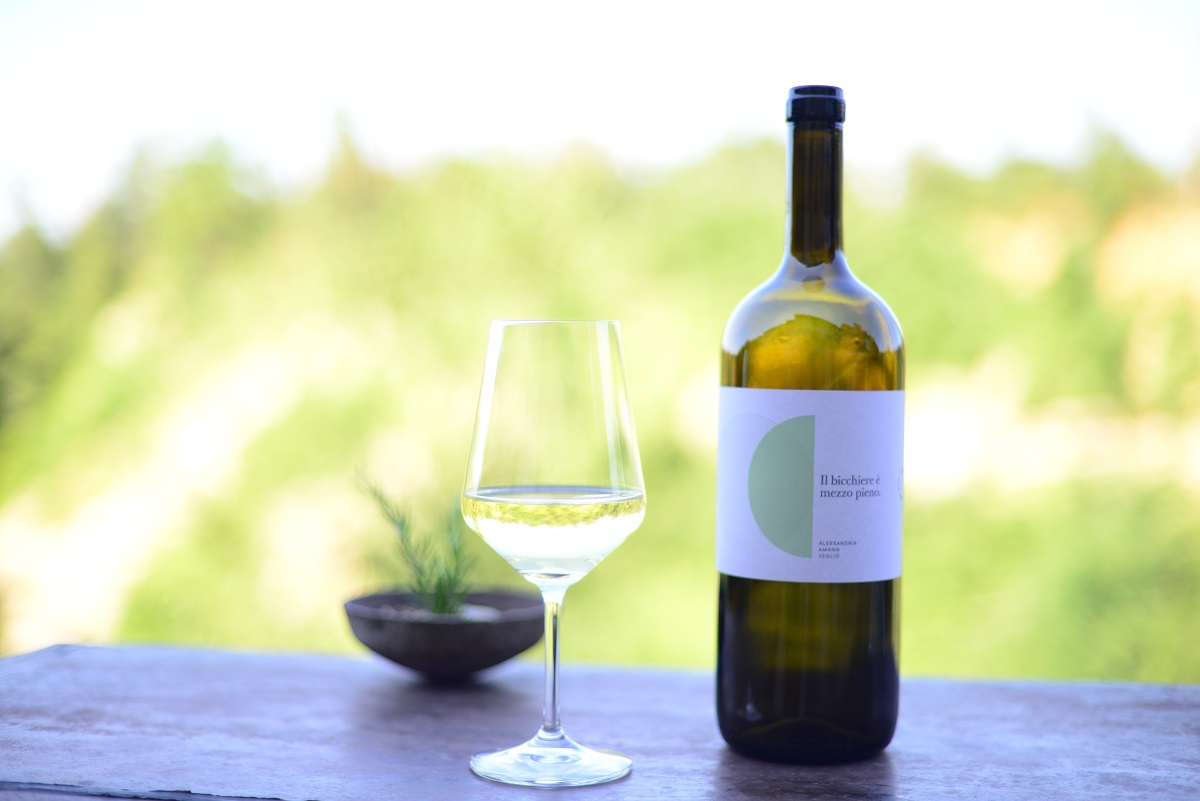
We agree. We want to express all the positive energy that people here are giving us and that we carry within ourselves. We want to bring an attitude to the project that reflects our personality and how we treat the people around us—friends and family. We fill our glass with wine, and it’s half full—il bicchiere è mezzo pieno (the glass is half full). That’s what needs to go on the bottle.
Let’s talk about it: Some will say it’s half empty; for others, a half-full glass of wine is a glass that lacks nothing. And still others will say the glass is too big.
We print a semicircle on the label, which wraps exactly halfway around the bottle. Along its edges, the name of the wine in a halved, continuous line: do what you love what you do what you love … The solidly printed semicircle overlaps with a circle of concentric lines, subtly differentiated by their shades of color. The filled area is one half of the whole—the other half remains open, leaving room for interpretation.
Craft
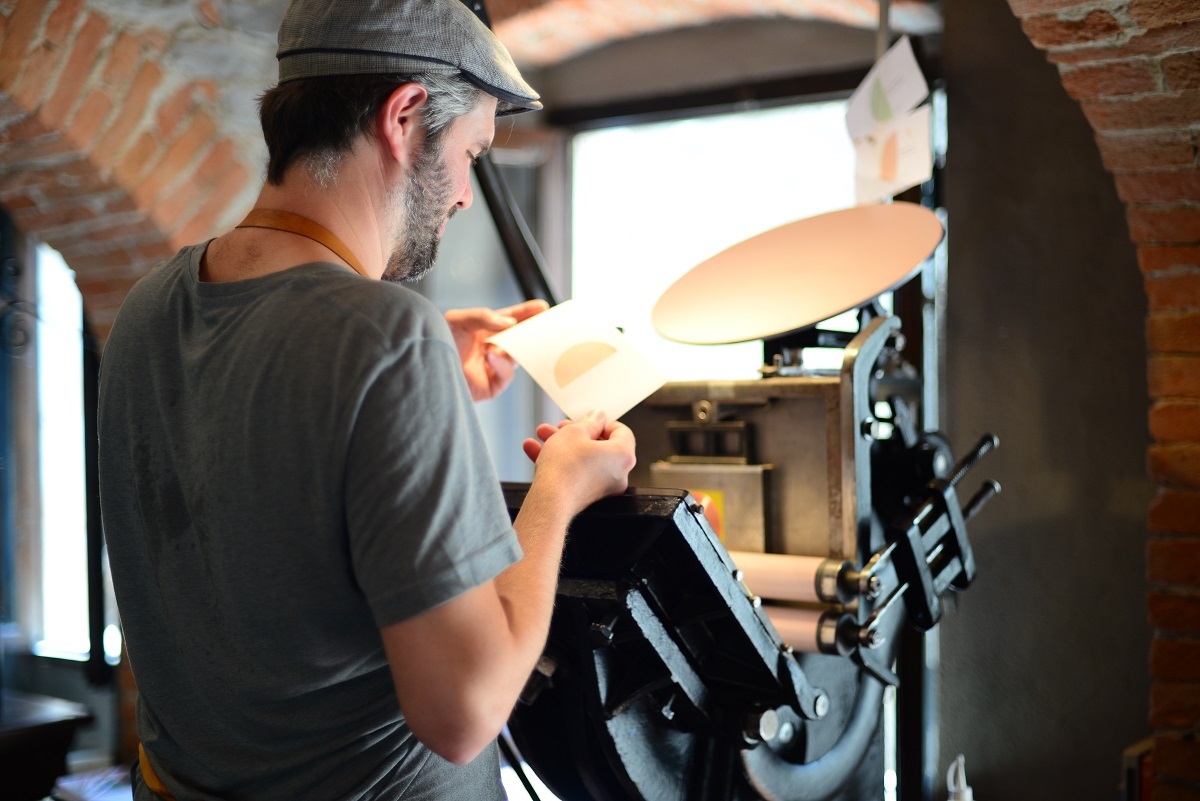
So our hand press is standing in our temporary Italian studio, patiently waiting for its moment. It takes weeks to get everything ready. Our neighbor Ivan, the art printer here in Castello, put us in touch with a colleague who could make the printing plates for us. We had no idea how creative this Italian prepress specialist would be. When we pick up the plates, we find that he has increased the thickness of the type’s strokes—which has a serious impact on the delicate typography. So we decide to place an express order for the printing plates in Vienna with our usual partner.
The paper has arrived: not only is it wonderful for letterpress, it also has a very special quality. Waste from wine production (grape pomace) is added to the pulp, giving the material a very distinctive feel and a slightly warm, reddish hue, as well as a brilliant upcycling factor. On our trip to Piedmont, we visited the traditional Italian paper manufacturer Favini. When it comes to innovative and sustainable product ideas, they can truly be called pioneers. And, thanks to Avery Dennison, we were able to find a way to source the label paper in the small quantity we needed.
We’re pioneers, too. Years ago, when we started working with letterpress, we didn’t want to use traditional oil- or rubber-based inks, but looked for alternatives. We talked to our print shop, which is also committed to sustainability and follows the “Cradle2Cradle” approach. They use biodegradable inks on their offset presses. We were able to try them on our letterpress machines, and we’re absolutely convinced by the color reproduction and print quality. Thankfully, we’re spared any toxic fumes. To be honest, we’ve never tried conventional printing inks.
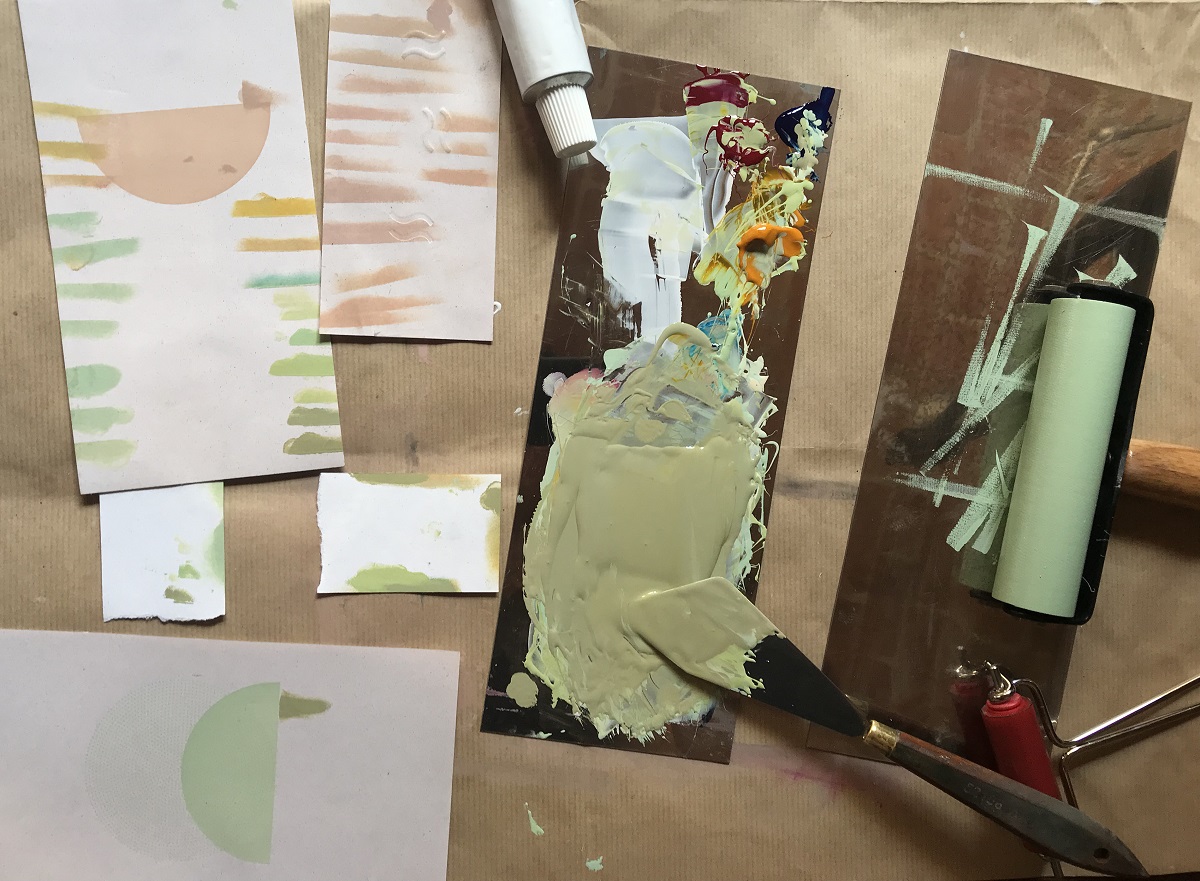
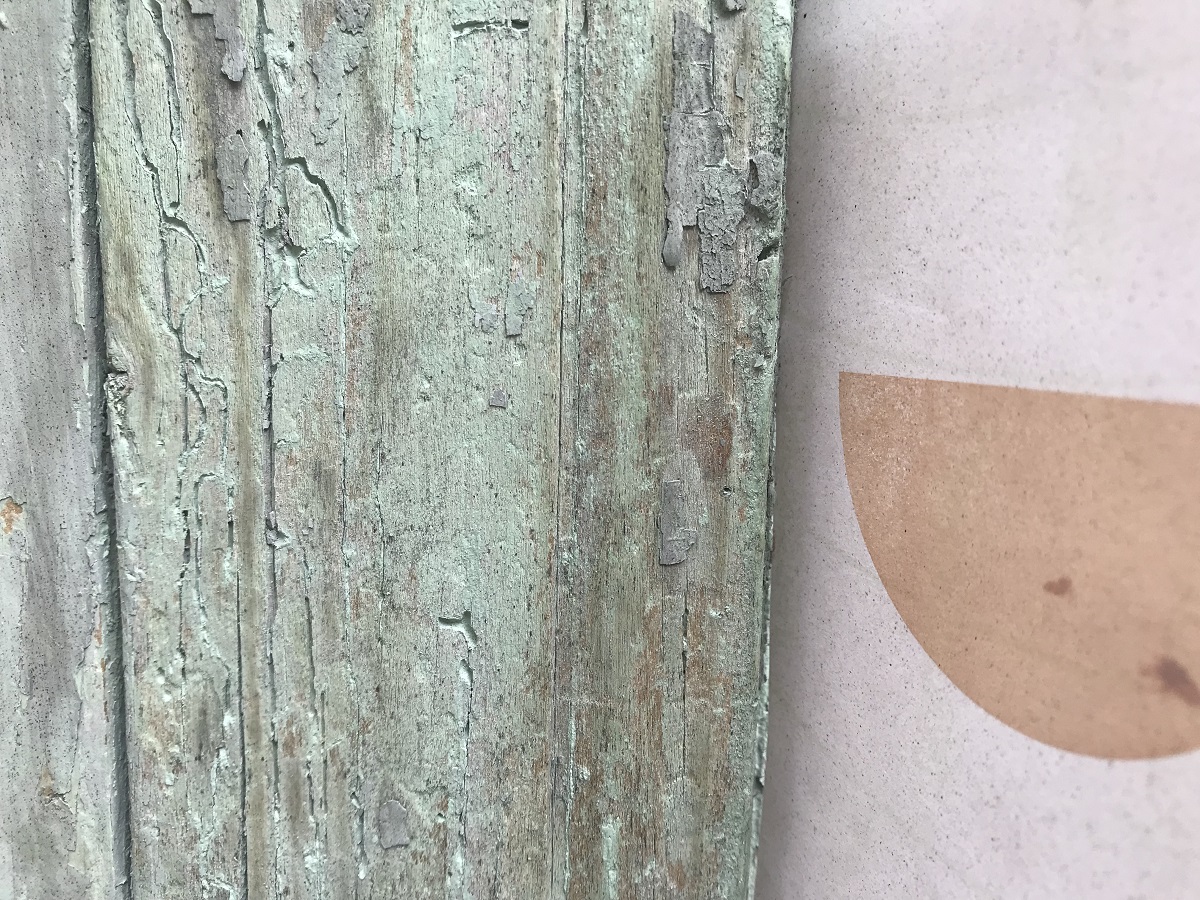
We don’t use ready-made pots of color in our work. Each color is mixed anew for every print run. So we grab our color fan and set off on a journey through Dogliani Castello and the surrounding area: the changing light at different times of day makes the wonderful patina of all kinds of materials glow in the squares, alleyways, and gardens! The natural, finely balanced hues and shades of wood, stone, brick, grasses, and trees inspire us. Later, in the courtyard behind our studio, where the light falls beautifully and evenly, we search for the right mix of yellow, magenta, cyan, black, and white. This takes a delicate touch and time—a spatula-tip too much of one color, and the hue shifts in a completely different direction.
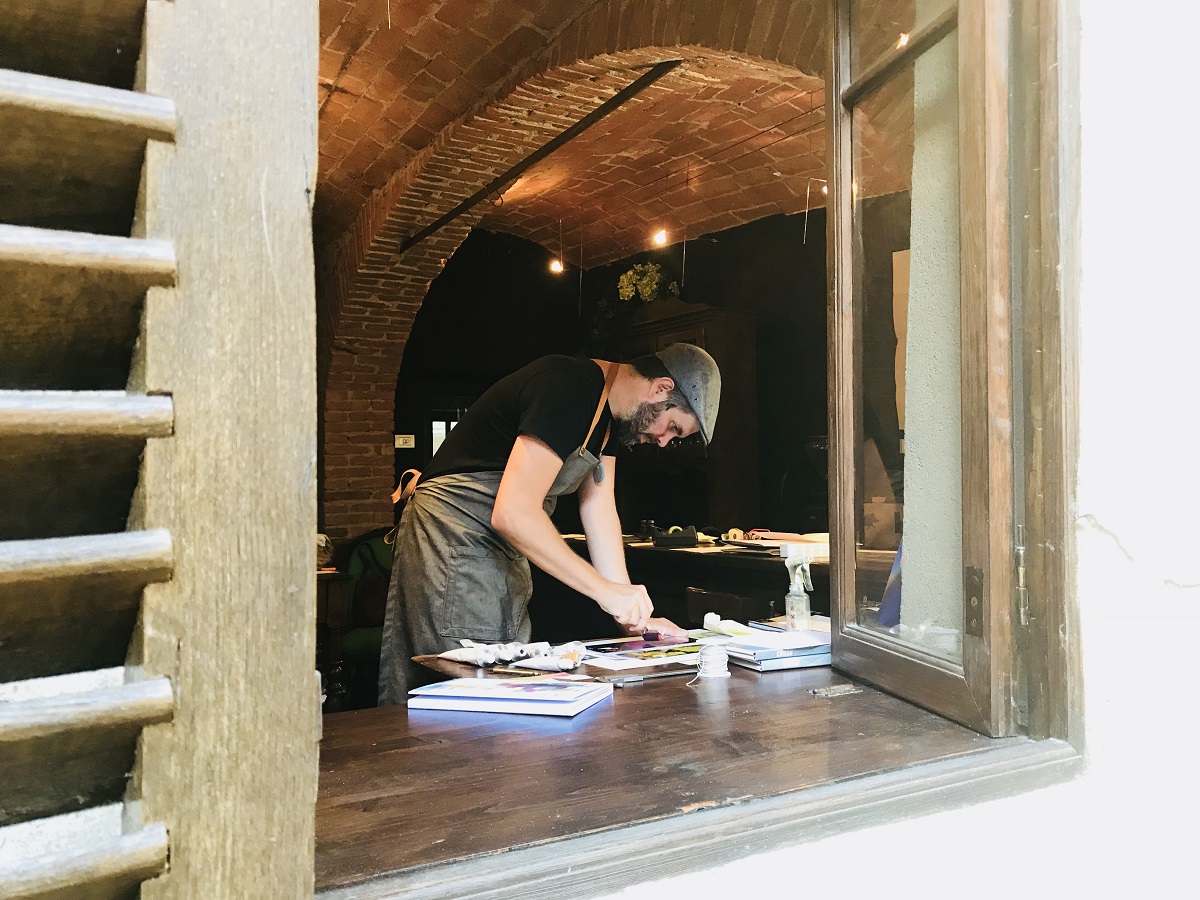
So. We mix colors with spatulas and rollers, adjust and tweak the old machine, and work our muscles to apply just the right pressure to the lever. The perfect print comes from the consistency and amount of ink and the right balance of pressure—not too gentle, not too firm. The ancient cast-iron machine is running—but it has its quirks and irregularities. There’s no relying on consistency. Constant readjustments. Every sheet becomes one of a kind. Often, we work late into the evening. Clack-zing-clink. Paper out, paper in. Clack-zing-clink. Watching the ink. Paper out, paper in… You can hear from the rollers’ smacking sound whether there’s still enough ink on the ink disc. Clack-zing-clink. Music, wine, and a steady stream of curious visits from familiar and new faces. We could happily keep going forever.
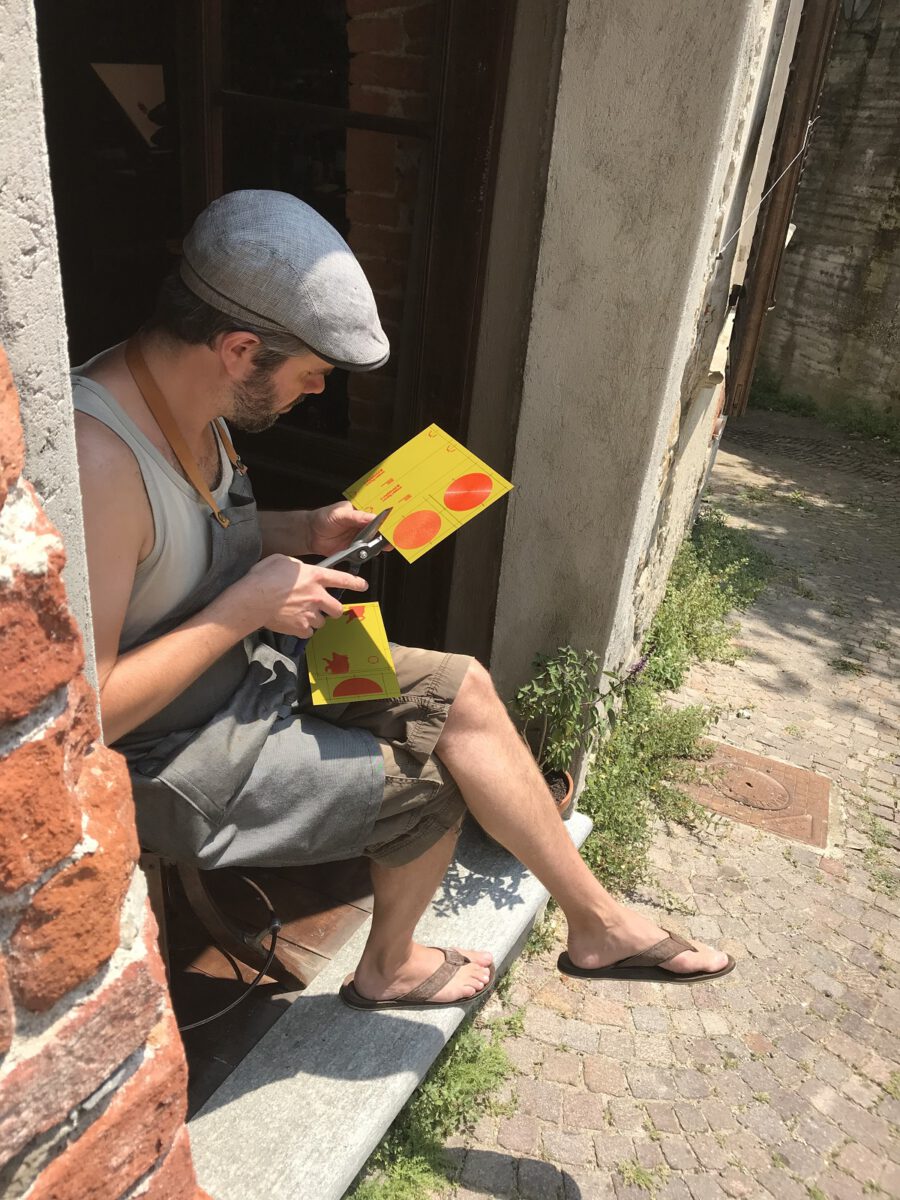
And then there they are. Stacks of freshly printed labels. We run our fingers over the paper and the colored areas, savoring the moment—what joy and satisfaction! One stack is still half-finished. We’ll print those later, together with everyone.
The Celebration
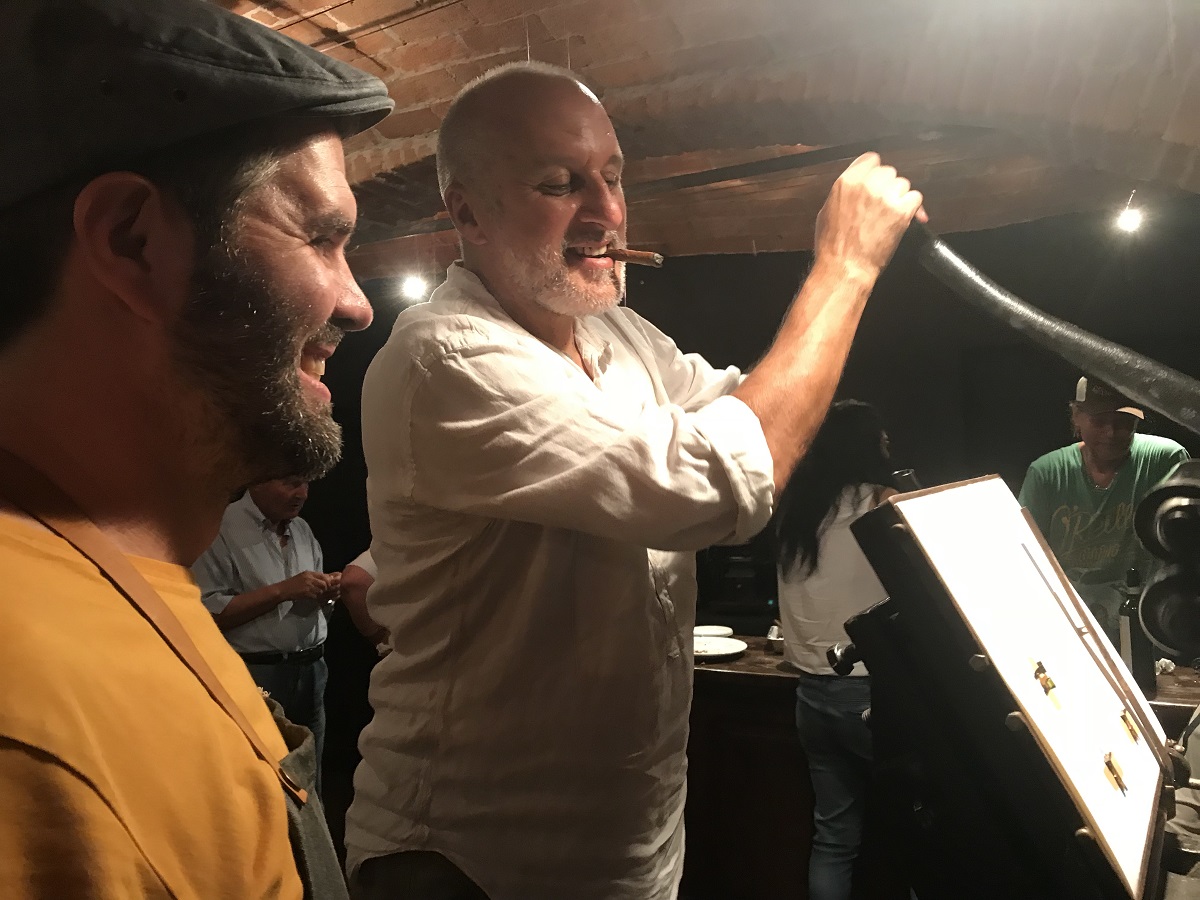
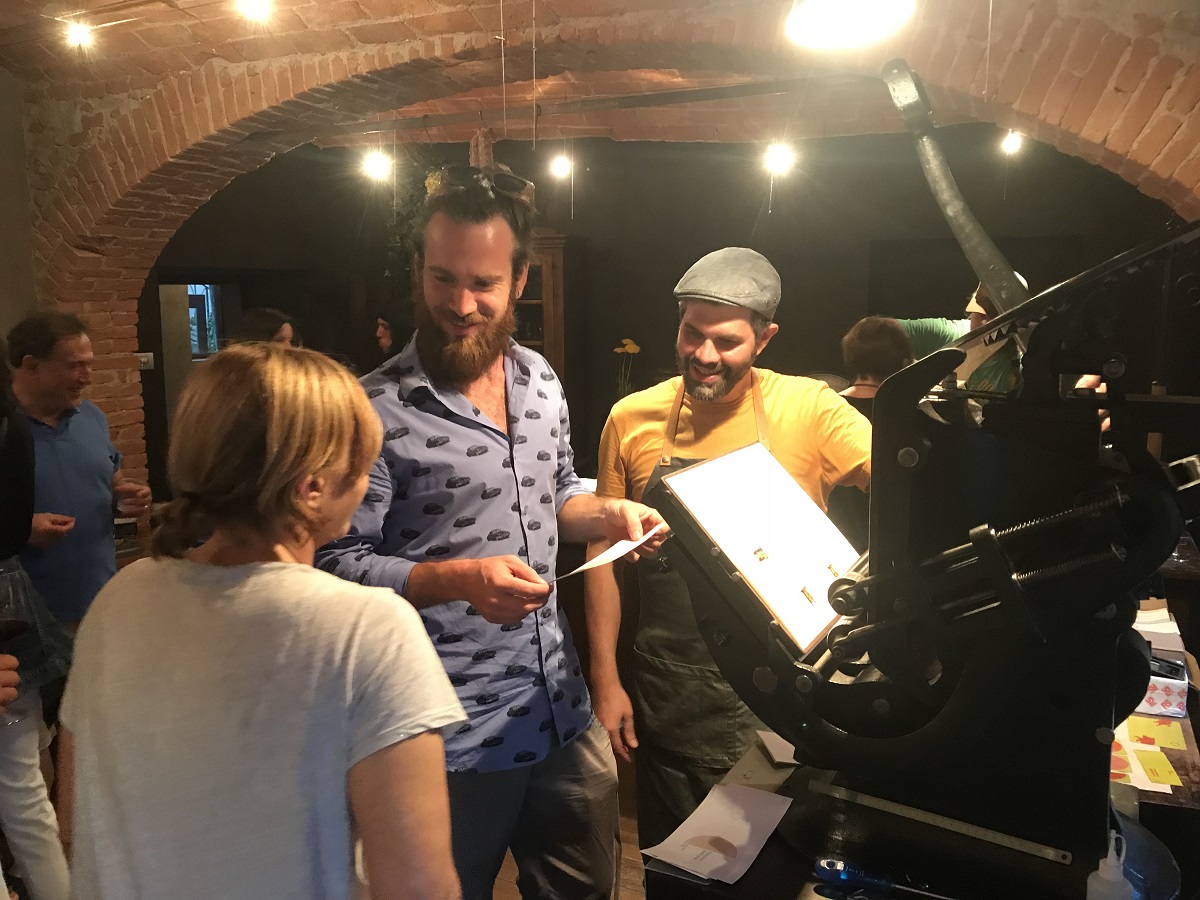
So we’re throwing a Popup Print Party. We open all the doors and windows of our temporary studio, get the printing press ready, and bring out the wine and music. Word has somehow got around that we’re working away here and that things are happening that aren’t quite everyday occurrences. In the early evening, after France has won the FIFA World Cup, people arrive from every direction. They bring trays piled high with homemade Piedmontese delicacies to celebrate with us. A converted bicycle, complete with parasol and a stocked fridge, rolls up.
Wine corks pop. Everyone has a story to tell, and before long a convivial atmosphere fills our workshop and the alleyway, including the courtyard behind it. The printing press clinks away, drawing more and more curious eyes. What’s being made? How does it work? We invite our guests to try it themselves. Our neighbors Gabriela and Franco, Bibi the shoe seller with a cigar in the corner of his mouth, Cincia, the petite wife of the art printer, and all the children. They listen to the instructions with great interest and are delighted to be part of the project. Some take home their own creation as a memento. We celebrate late into the night.
The labels we finished printing together have become a product charged with emotion, given its own character by every single hand movement of everyone involved.
And that was exactly our goal. We wanted to start an experiment and create something together, in exchange with the people here.
It was a celebration! And we’re already curious to see where our next printing adventure will take us.