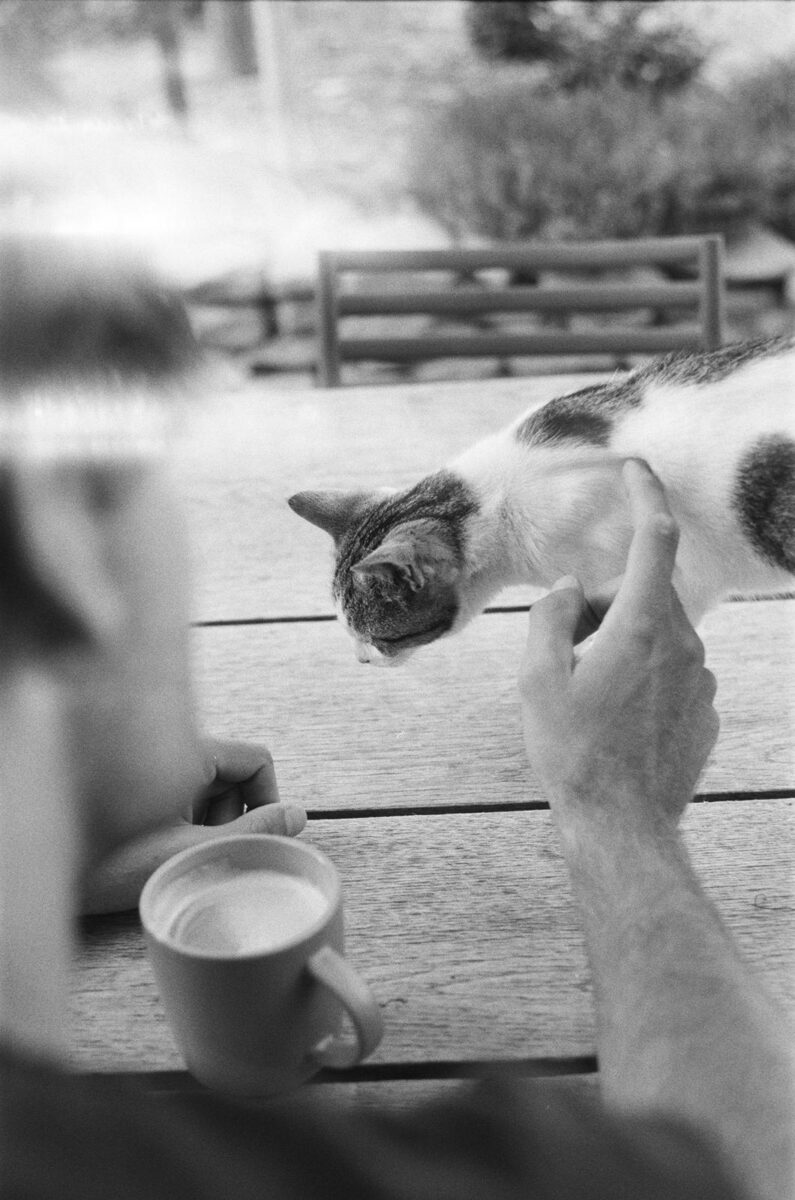
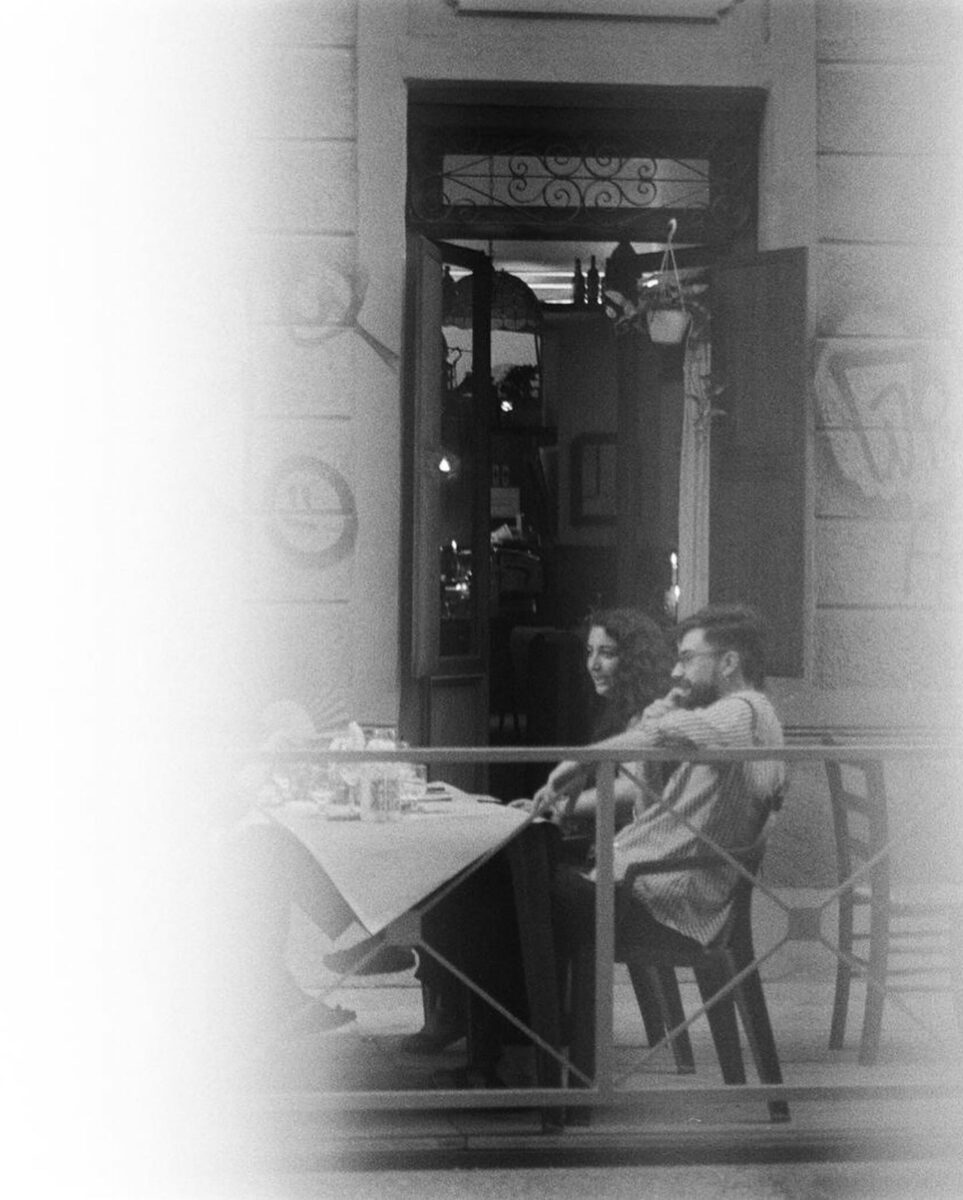
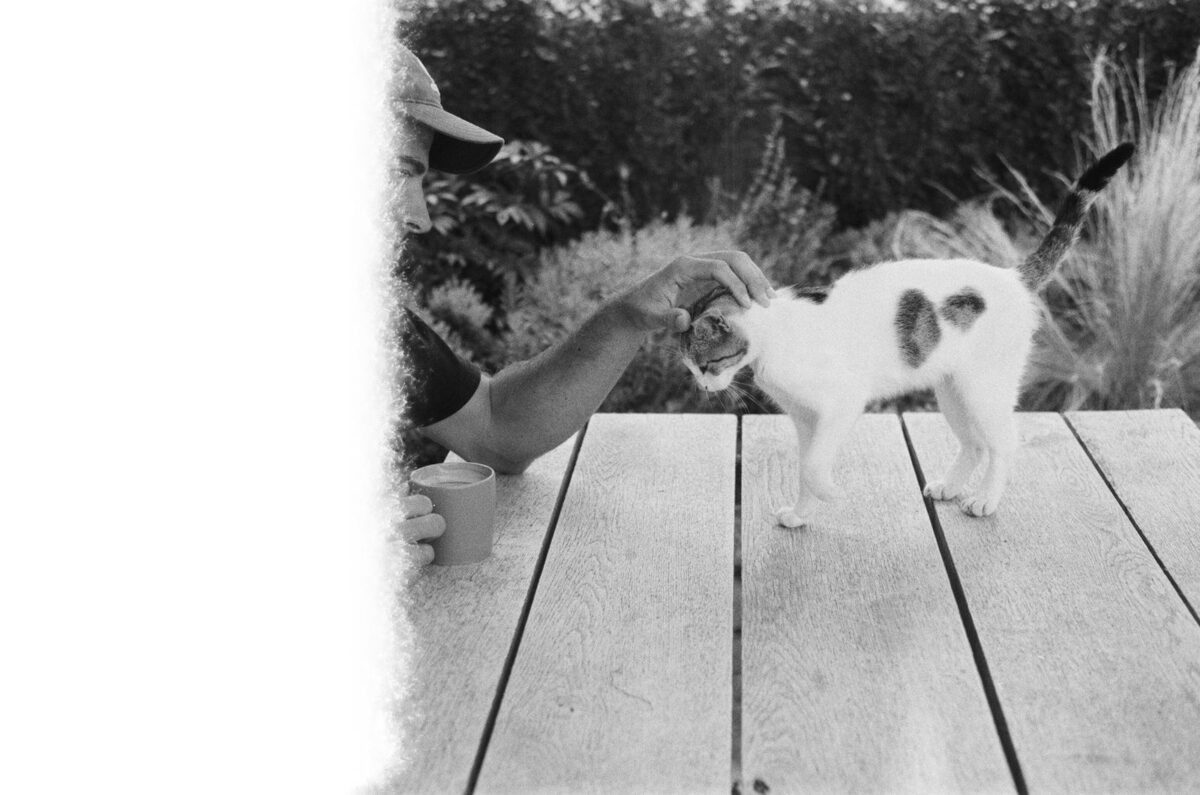
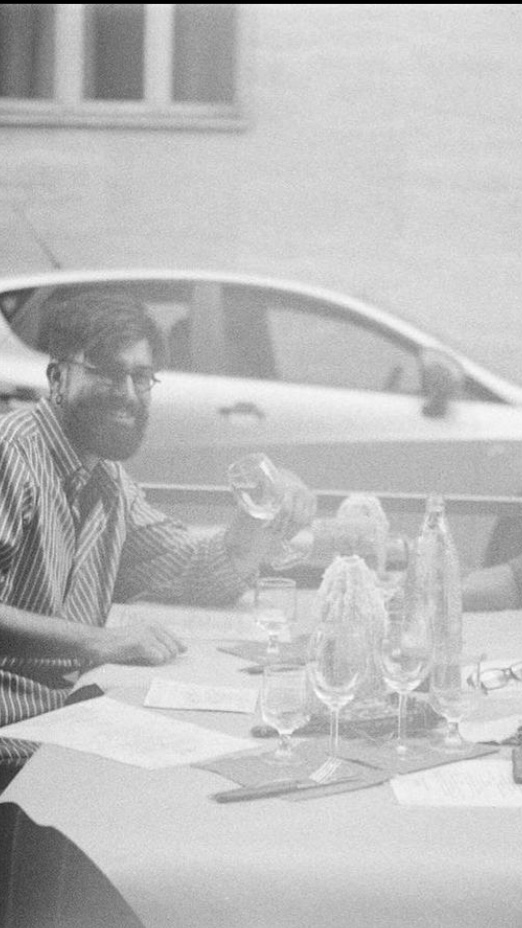
Focus. Release the shutter. Carry on. One roll of film, the same sequence 36 times. Every movement happens unconsciously, and yet with such mindfulness. My camera is an heirloom from my grandmother’s brother. It had already travelled the world with him in the 1960s and done what only analogue cameras can do in their own very special way: archive time.
Even today, thousands of shots later, when I look through the viewfinder, I can smell Uncle Josef’s hand-rolled cigarette tobacco—a reminder of a time when you could still smoke on planes and it was weeks after a trip before you could share the visual memories with others.
Analogue photography is pure suspense. You’re aware of trying to catch the right moment, but only find out whether it was the one once the film has been developed. There’s a completely different kind of care behind it, an attentiveness to the moment. Being aware of the “here and now,” with the intention of capturing it forever, is almost meditative.
My love of photography began when I got my first camera for my sixth birthday: a fully automatic Kodak compact camera with 3x zoom. It was love at first sight, and it still is today. The inherited upgrade came years later.
From then on, I spent all my pocket money on rolls of film. In the financially tight months, 24 exposures, 200 ISO; in the good months, 36 exposures, 400 ISO.
There must have been hundreds of photos of my budgie Herbert and Grandma’s cat, Hannibal III, taken during that time.
Years later, when the local Schlecker store closed and with it the only affordable way to develop the shots from my Kodak, I had no choice but to take matters into my own hands. My mother, aware of how short-lived some of my ideas could be, was sceptical, but let me go ahead as long as I took care of everything myself.
My father generously gave me a small corner in his ski cellar, where he helped me put an old shelf and an even more dilapidated table right under the ski-boot dryer. There was no water connection, but I could fetch water for the developing process in buckets from my grandmother’s nearby laundry room.
I was incredibly lucky that my neighbour Friedrich was a tinkerer and inventor. I knew that when it came to finding the centrepiece of my darkroom—the enlarger—only he could help me. That summer, he became my best friend. I gathered everything else—trays, tongs, photographic chemicals, a safelight, paper, filters, developing tanks—at flea markets or got it from photographers who, following the trend, preferred to devote themselves to modern digital photography. The whole world seemed to have gone digital, but my heart remained analogue.
Expose – develop – stop – fix.
Hour after hour, I spent working out the right exposure time with test strips and figuring out how to prevent water spots on negatives. The smell of ski wax and fixer became the smell of my youth.
At 13, I held my first exhibition in the village retirement home. It featured 24 portraits of the residents. They were every bit as delighted as I was. Five years later, I began studying photography in Vienna.
Shortly after graduating, I met Yvonne. After years of friendship and working together at her cultural association in Piedmont, she gave me the opportunity to give my passion the space it had deserved all those years. A custom-designed, handmade darkroom in the Alta Langhe. It came into being within the old walls of the beautiful Borgata Casale, right at the back, almost inconspicuous and yet full of impact. A plan drawn on a napkin served as the basis for Yvonne, Jörg and the craftspeople to create the little light-free room. Ever since, it has been home to Friedrich’s enlarger, my flea-market finds and the many precious sheets of photographic paper.
This place brings old techniques back to life and invites everyone to do the same. Those who are interested can book workshops or spend their holiday developing their analogue films, archiving time and preserving memories in a very special retreat.