We, in the hills.
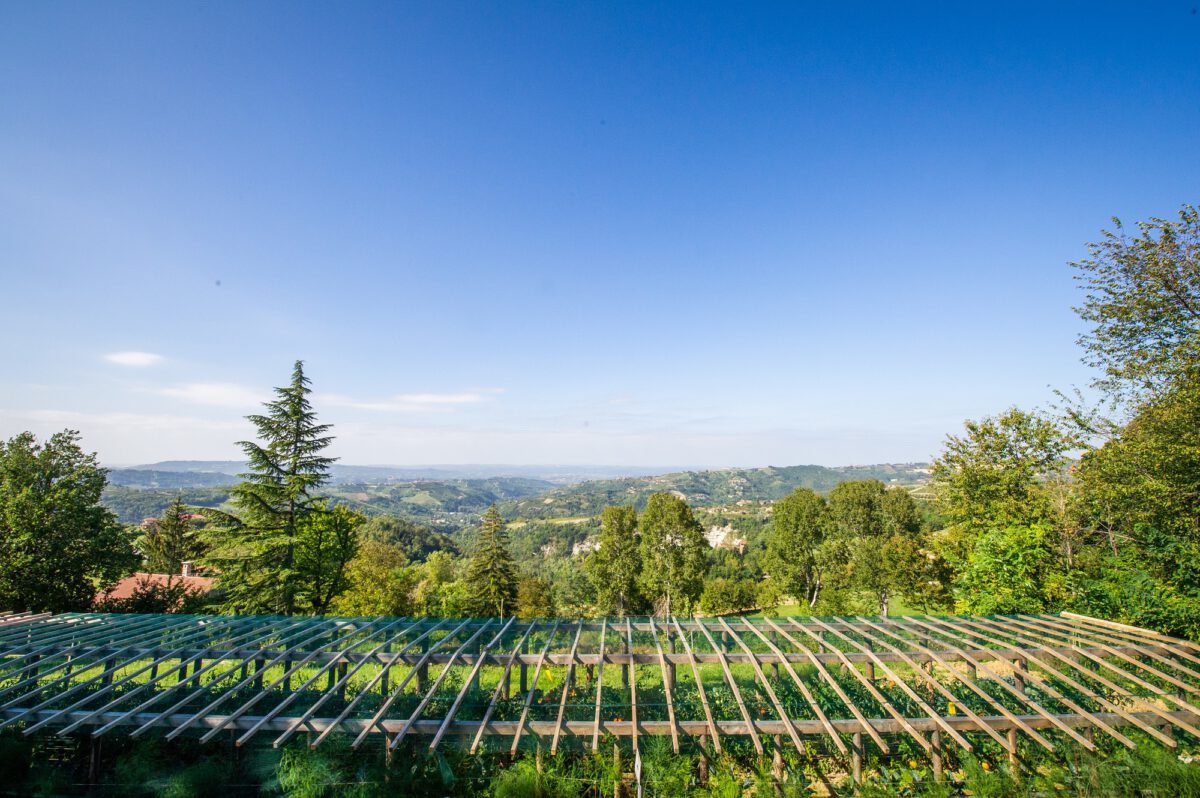
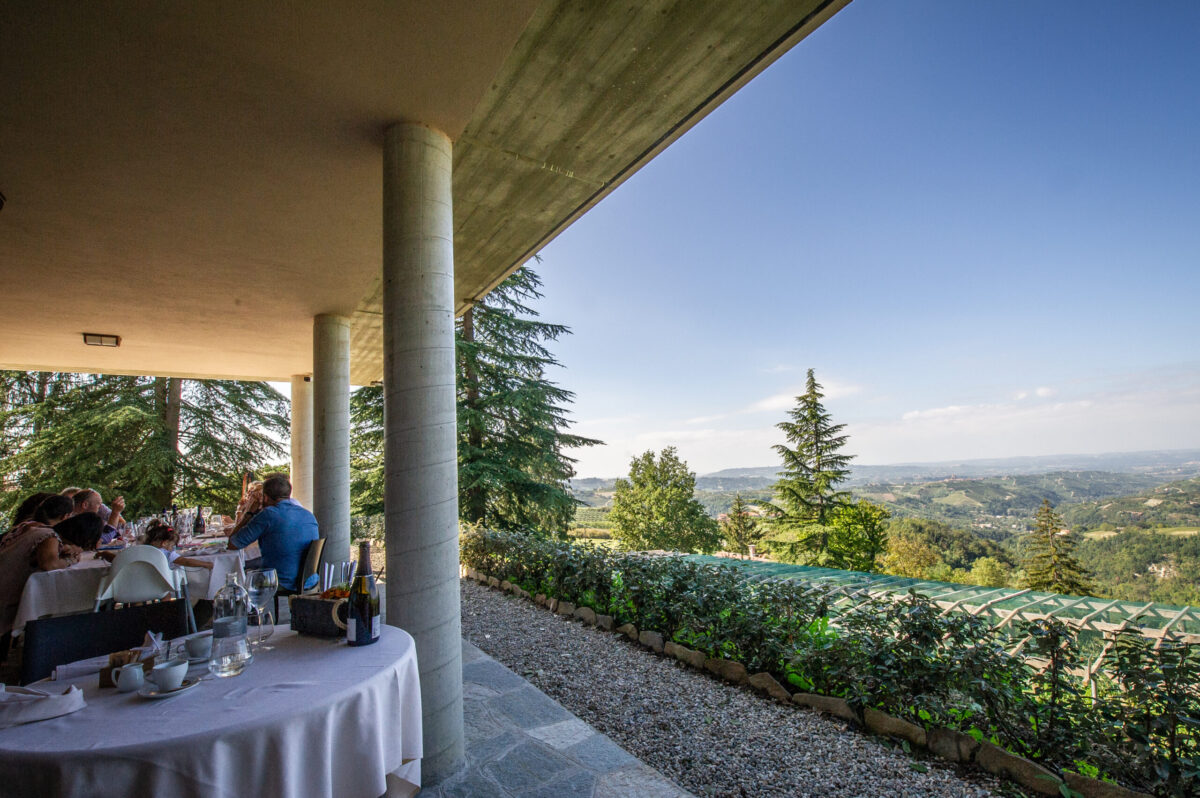
Sitting on the terrace at Uri in Verduno and letting your gaze wander over the gentle hills of the Langhe, it’s easy to lose track of time and place. There’s something special about this place; it has a certain power. Perhaps even a little magic. In any case, it’s a place of outstanding cuisine. The “Sapori” in its name lives up to its promise. But condivisi? Why “shared” flavors? And what does Uri mean, anyway?
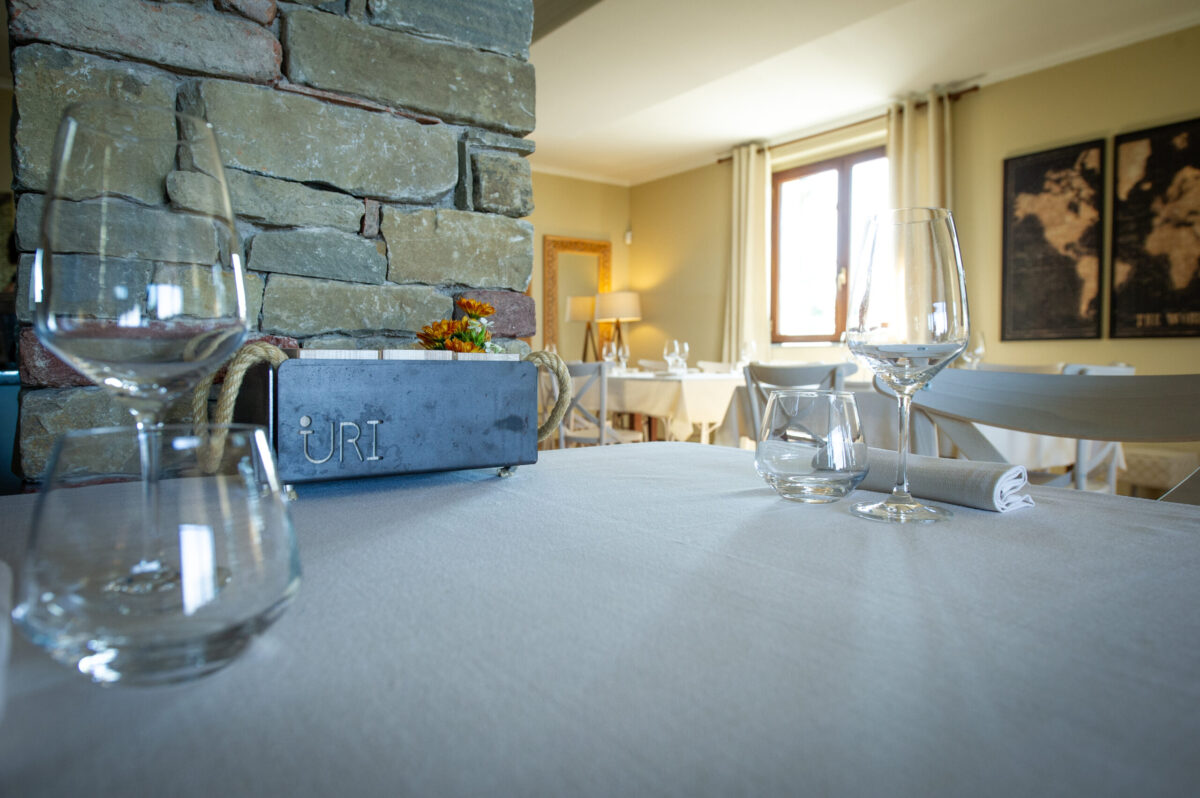
The answer lies in the story of Frederica and Kim, who run Uri with great passion and dedication. She, Frederica, is Italian. He, Kim, is Korean. The two met at Massimo Camia in La Morra. From there, they moved to Davide Palluda’s “Enoteca,” and from then on they went everywhere together: love, marriage, their own restaurant. Uri (which, incidentally, is a Korean word meaning “we” or “ours”) is a restaurant deeply rooted in the culinary tradition of the Langhe, while adding exciting elements from Kim’s homeland to Piedmontese cuisine. As a guest, you might notice this in dishes served in large bowls at the center of the table, for everyone to share. Or in the fact that Kim doesn’t simply pick vegetables from his garden; they arrive on the plate lightly fermented. That’s something the Koreans are masters at.
Two menus to choose from
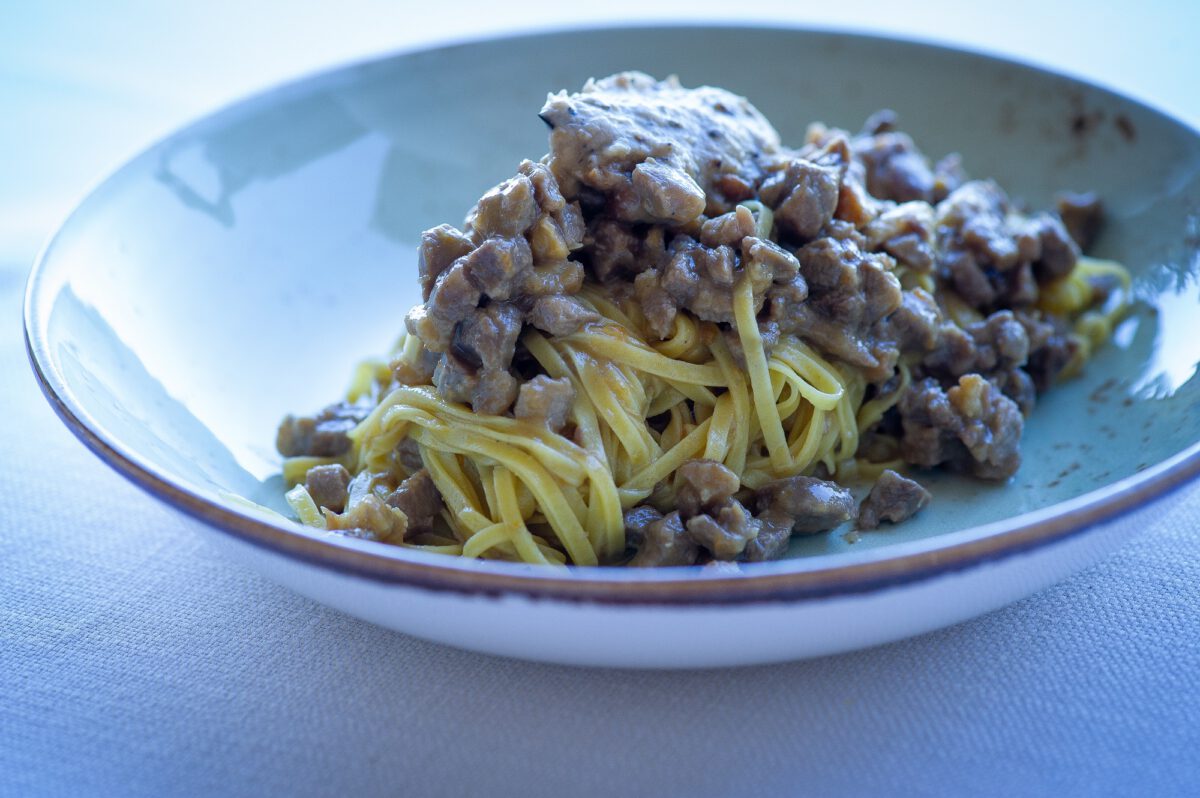
The concept works. And how it works. At Uri, there are always two menus to choose from: one traditional, the other more experimental. You can’t really go wrong with either. The first course of the “Menu Piemonte” is simply called antipasto misto, arrives in two servings, and already sets the bar pretty high. The Battuta di Fassone alone would be reason enough to keep coming back here, again and again. Perfect-quality meat, coarsely chopped, with a hint of olive oil. Then there are wonderful Tajarin: deep-yellow pasta ribbons, even thinner than tagliatelle, served with an exceptionally good ragù (hare). Or plin di carne e fondo bruno: pasta parcels filled with lamb. The main course was Brasato al Barolo, a beef roast slowly braised in wine, which—apparently depending on the chef’s whim—sometimes goes into the oven as Brasato al Nebbiolo instead. Both are spectacular beef dishes.
Across the way, the experimental menu is less traditional. A crispy sandwich with guinea fowl and béarnaise sauce, by now almost a signature dish at Uri, or ottoke: a pancake filled with a mix of cinnamon, honey, raisins, and hazelnuts. In Kim’s homeland, where the recipe comes from, peanuts are used. But by now he has found a new home. Here’s hoping Uri will be around for us and the Langhe for a long time to come.